Plumbing job guides, page 5
Guides to plumbing at home, from leaks and blockages to fitting and replacing: checks to make first, steps you can do yourself and when to ask for help.
Vertical radiators: wall strength and pipe tails
Vertical radiator installation checks: wall type and fixings, flow side, pipe centres, valve clearance, draining and refilling the system and balancing after.
Wall-hung frame heights and wall build-up
Wall hung toilet frame height explained: finished floor level, 82, 98 and 112 cm frames, pan rim height, wall depth, flush plate access and pre-boarding checks.
Fitting a bottle trap
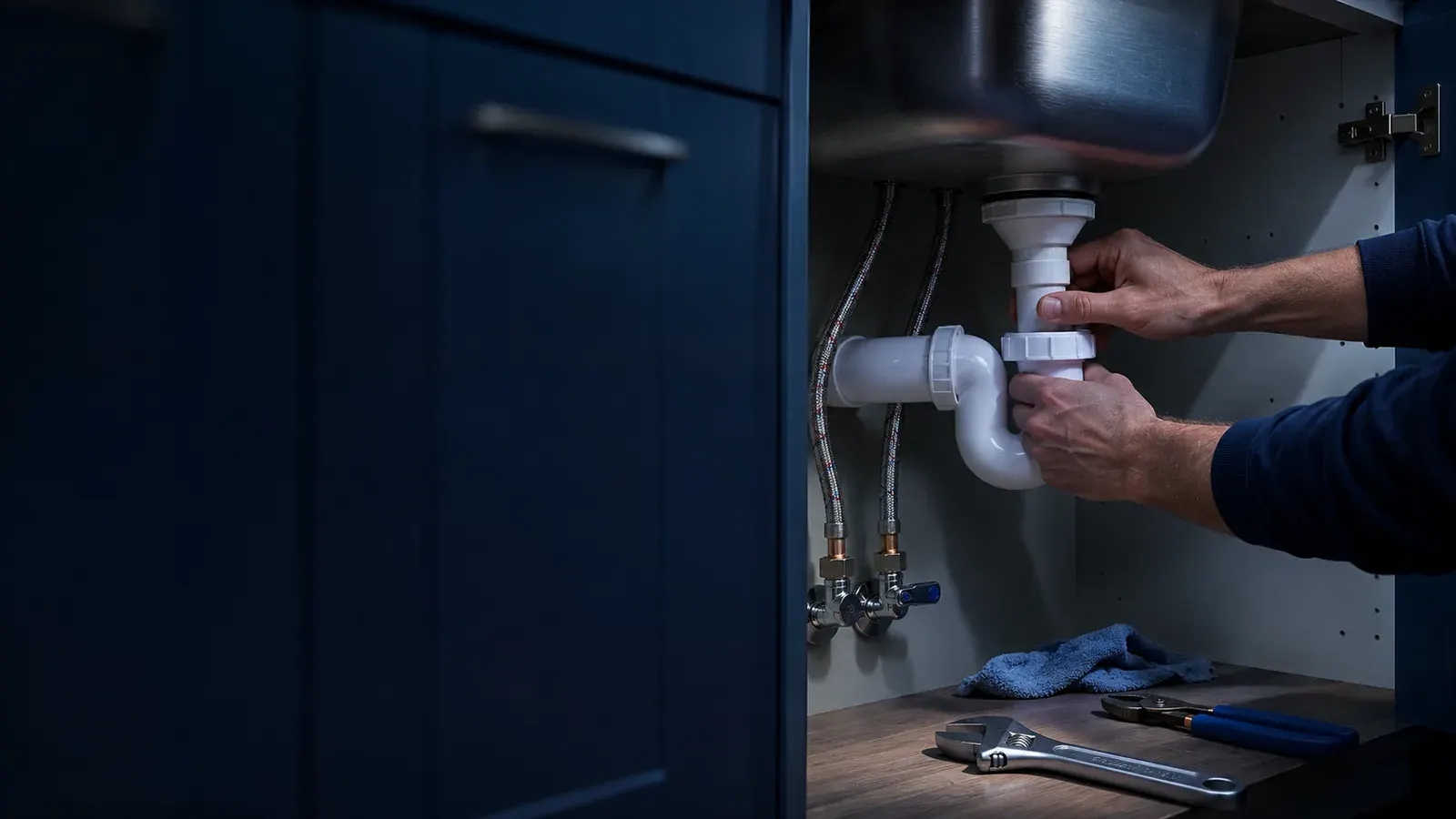
Bottle trap installation for a basin: sizes and seal depth, setting inlet and outlet height, cutting the wall pipe, hand tightening washers and leak testing.
Fixing a toilet pan to tiles or timber
How to fit a toilet pan to the floor: level and dry fit, check for pipes and cables, drill tiles safely, fix timber or solid floors and avoid cracking the pan.
Freestanding bath fillers: floor fixing and pipe runs
Freestanding bath tap installation: reinforce the floor, set pipe positions under it, fix the base, flush and connect, protect against backflow and keep access.
Low-profile trays: waste depth under the floor
Low profile shower tray installation: find room for the trap under the floor, support the tray fully, keep access to the waste, test the flow and then seal.
Replacing a click-clack plug
Click-clack waste replacement step by step: check whether only the cap has failed, match overflow type and thread, reseal the flange, refit the trap and test.
Replacing a shower diverter
Shower diverter replacement: identify the diverter type, isolate water, remove the cartridge or valve, match the exact spare, check seals and test every outlet.
Shower in a bedroom: waste, extraction and electrics
Planning a shower cubicle in a bedroom: finding a waste route, extract ventilation, electrical zones, floor load, splash protection and permissions to check.
Single, twin, positive and negative head pumps
Shower pump types explained: single and twin impellers, positive and negative head, supply requirements, notification rules and what to check before choosing.
What to tell your fitter before kitchen first fix
What to settle before kitchen first fix: sink and appliance positions, waste heights, isolation valves, hidden joints, extraction and photos before closing up.
Cutting pipe in a tight space
How to cut copper pipe in a tight space: compact automatic cutters, mini wheel cutters and blades compared, plus isolation, clearance checks and deburring.
Electric-only towel rails: who fits them
Electric towel rail installation covers sealed electric and element-filled rails: fixed wiring, bathroom zones, filling for expansion and who should connect it.
Fitting a bath screen
Fit a shower screen over a bath: check the bath and wall, find hidden pipes, set the wall channel plumb, drill tiles, hang the glass and seal the right side.
Fitting a kitchen sink waste and strainer
How to fit a kitchen sink waste and strainer: order the washers, seat the flange, tighten without twisting, join the overflow and trap, then test for leaks.
Fitting a monobloc kitchen tap
Monobloc tap installation: check hole and pressure, flush pipes, fit tails by hand, clamp the tap from below, connect hot and cold with valves and test.
Fitting a shower waste and trap
Shower tray waste fitting: choose a trap for the depth you have, place the seals correctly, connect a falling pipe, keep access and flood test before sealing.
Fitting a tray on a solid floor
Fitting a shower tray on a concrete floor: decide where the waste pipe runs, choose legs or a solid bed, prepare and level the slab, then test before tiling.
Making a compression joint
How to use a compression fitting: cut and deburr the pipe, place nut and olive, hand tighten, add the correct spanner turn, avoid overtightening and test.
Plumber or electrician for an electric shower
Who can fit an electric shower? The wiring needs a competent electrician and often notification; the water connection is plumbing. How to split the job safely.
Replacing spout O-rings on a mixer
Tap O-ring replacement on a mixer: find whether the leak is spout or handle, isolate, remove the spout, match the ring size, grease it lightly and refit.
Shower wall panels around pipework
Shower wall panel installation: prepare a sound wall, cut holes for pipes and valves, leave expansion gaps, use matching sealant and keep services accessible.
Waste kits for one and a half and double bowl sinks
Choose a 1.5 bowl sink waste kit: match both hole sizes, overflow type, bowl spacing and depth, add appliance nozzles and keep the shared trap falling.
Basin, tap and waste heights
How to choose basin height from floor level: use the product drawing, allow for users and pedestals, then position the tap outlet, waste and supplies to suit.
One list, however many jobs
Add what needs fitting or replacing, tell us the postcode, then email photos.