Connecting washers, dishwashers, fridges and other water-using appliances: the supply, waste and space checks, what to send and how each hose is tested.
An appliance connection gives a machine its water, takes the used water away and leaves a way to shut it off. Each appliance has its own page where the detail differs: washing machine waste, dishwasher waste, fridge freezer water and tumble dryer drain.
What the job involves
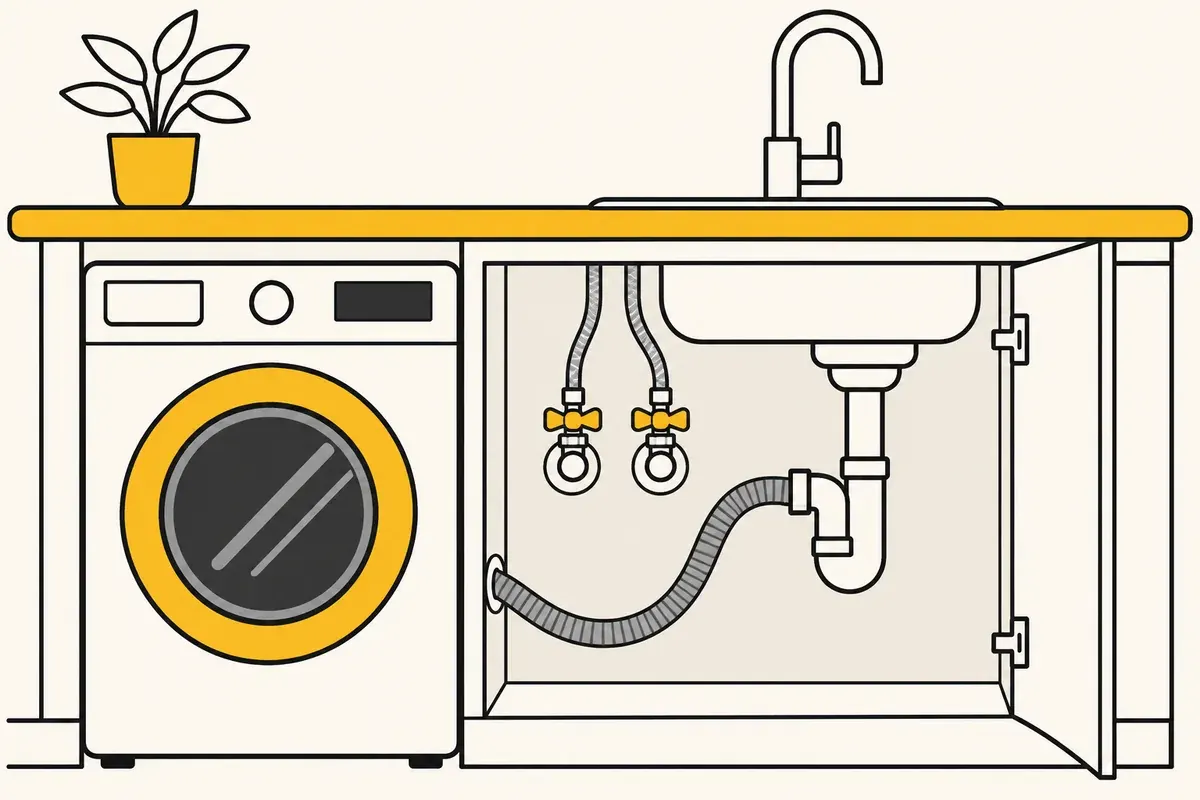
The work compares the manufacturer's installation sheet with what the room offers. That covers the type and position of the supply valve, the height and route of the drain hose, protection against siphoning, hose length and the space left behind the appliance. If there is no suitable point nearby, new branches are run. Extending hoses with improvised joiners is a weak substitute for pipework in the right place.
What we need from you
- The model number of every appliance to be connected or removed.
- A photo of the intended space with nothing in it, if possible.
- A photo under the nearest sink showing waste and supply pipes.
- Whether the appliance is freestanding or built into cabinetry.
- Whether an old machine must be disconnected first.
Safe first steps
Unplug the appliance or switch it off at its isolator before moving it. Close its water valve and watch that it really stops. Check the machine for transit bolts or caps that the maker says must be removed from a new unit. Tilt and drag with care: stored water spills from hoses and filters, and floors scratch.
How it is checked
- Valves opened with the appliance still accessible.
- A fill cycle, with both ends of each inlet hose inspected.
- A pump-out, watching the waste connection and the trap.
- The appliance moved into place and levelled.
- A second look to make sure no hose is trapped or rubbing.
Ice and water dispensers should be flushed as the manufacturer directs before the water is used.
Space, hoses and special cases
Check dishwasher cabinet dimensions or washer gaps including hoses before delivery. Fitting questions include integrated dishwashers, integrated washing machines, slimline and tabletop models, disconnecting a dishwasher, capping feeds after removal, fill hose connectors and two machines on one waste.
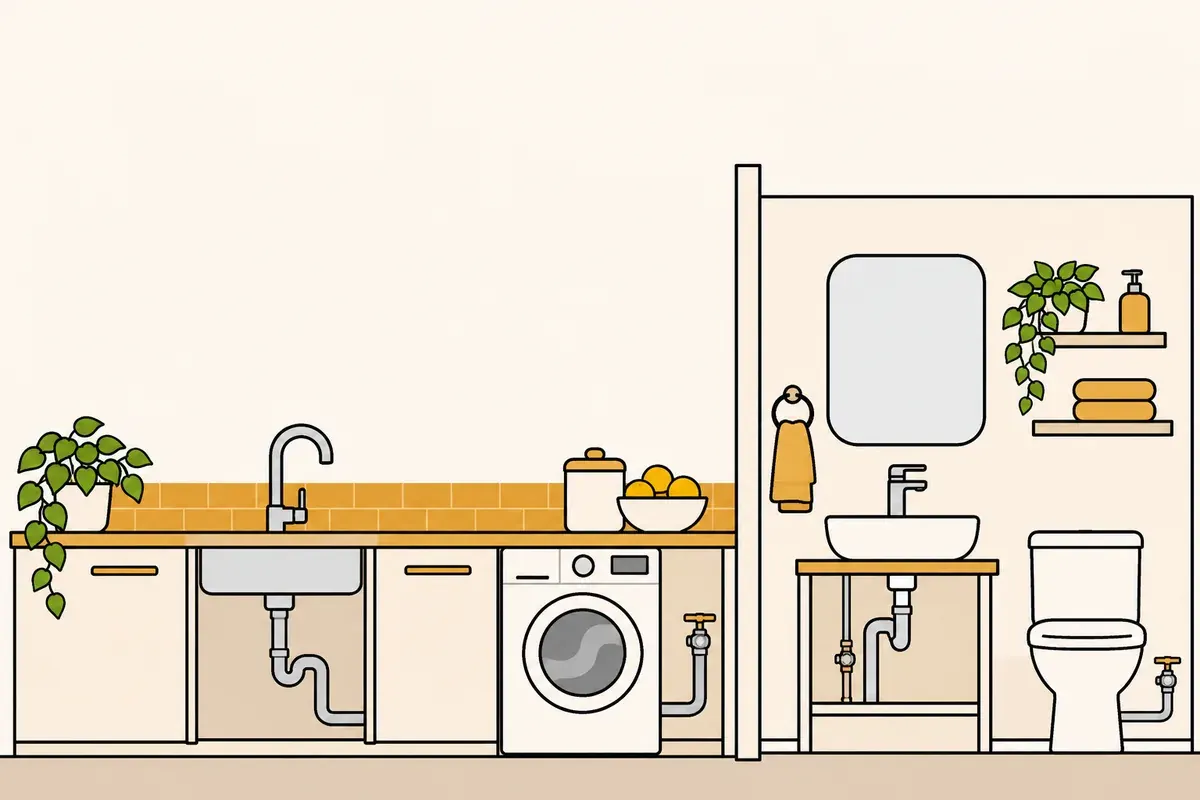
Unusual positions need more thought: upstairs, in a garage, in a bathroom, in another room, a laundry cupboard or a planned utility room. Smaller connections cover ice makers and coffee machines.
Where this service stops
Gas cookers and hobs are covered separately under gas cooker and hob connection and are connected only by Gas Safe registered engineers. A new socket, fused spur or circuit is work for an electrician. Faults inside the machine itself, such as a pump or control board, belong to an appliance engineer. If water appears from under a machine and the hoses and waste are dry, say so in your message so that the right person can be considered.
If you rent
Check that the tenancy allows new connections or alterations to cabinets, and agree who owns the added valve or pipe afterwards. List all appliances together in the contact form.
Removing an old machine
Disconnection is part of the job only if you ask for it. A redundant valve or waste spigot should be capped or blanked with a proper fitting, not left open behind a cabinet. Say whether the old appliance is staying in the property, and keep its hoses separate from new ones: reusing a perished hose invites a leak.