Running cisterns, weak flushes, loose pans and complete toilet swaps: how each fault is assessed, what we need to know and how the finished work is tested.
This service covers faults on a toilet and the exchange of one toilet for another. For sizes and single parts, the toilet guides go into each task; for water that will not go down, see blocked toilets.
Matching the fault to the work
| Symptom | Likely area to inspect |
|---|---|
| Water trickling into the pan | Fill valve level or flush valve seal |
| Cistern slow or silent after flushing | Fill valve or supply valve |
| Button or lever does little | Flush mechanism |
| Water at the floor | Supply joint, cistern fixings or pan connector |
| Pan rocks | Floor fixings or an uneven floor |
What the job involves
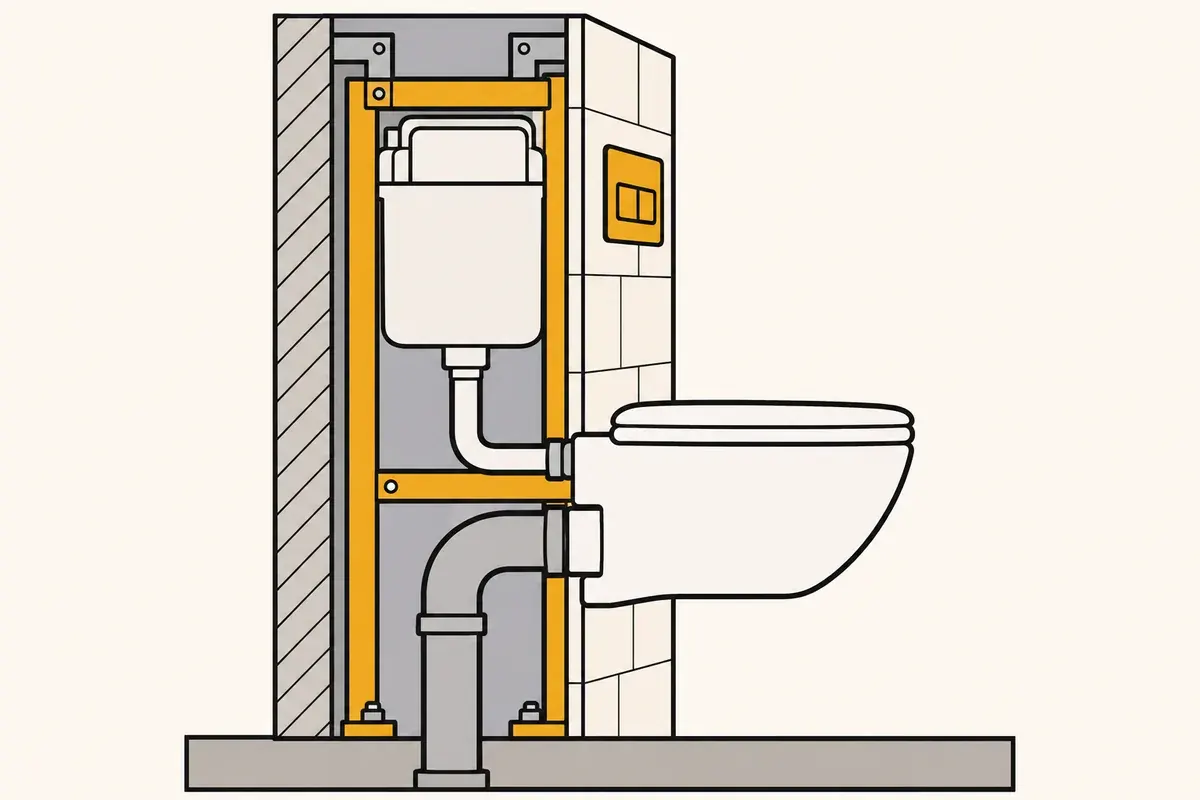
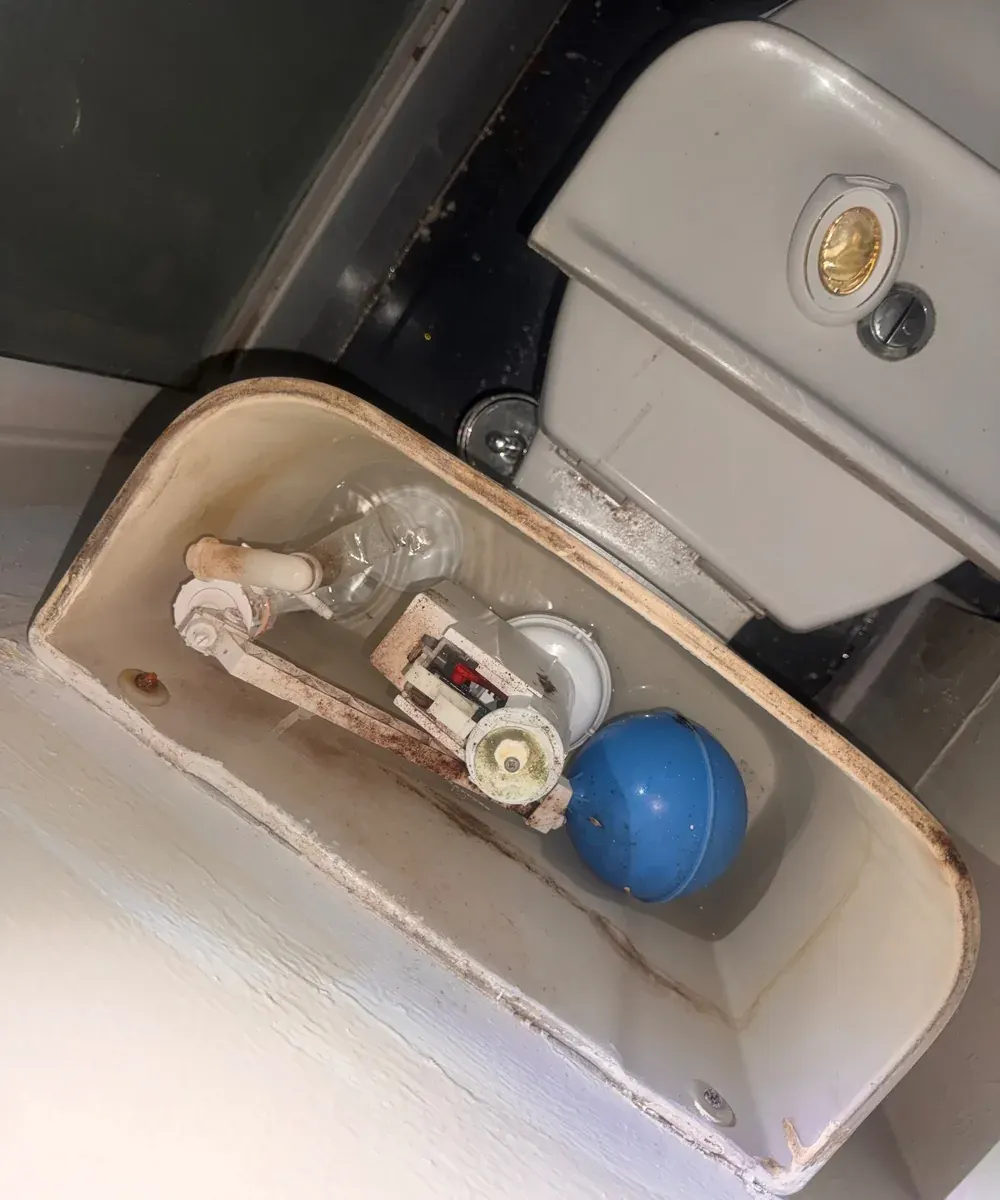
The lid comes off and the water level, float, overflow and flush parts are checked in action. Internal parts are replaced with ones that fit that cistern. Leaks between cistern and pan mean separating them to renew seals and bolts. A full replacement involves isolating and draining, removing the old unit, checking the position and condition of the soil connection, then fitting, levelling and connecting the new one. A change from floor mounted to wall hung is a larger piece of work with a frame behind it.
What we need from you
- Photos of the whole toilet, inside the cistern if the lid lifts safely, and the pipe at the back.
- Any brand name stamped on the pan, cistern or valve.
- For a new toilet, the dimensions sheet and the distance from wall to outlet centre.
- Floor type, and whether tiles run underneath.
- Whether this is the only toilet in the home, which affects how the day is planned.
Safe first steps
Close the small valve on the supply to the cistern if water is escaping. If there is none, use the stop valve. Lift a ceramic lid with both hands and lay it flat on a towel. Wipe the floor and place a dry cloth so you can tell where the water starts. Avoid tightening plastic or ceramic fixings hard; porcelain cracks without warning.
How it is checked
The cistern should fill to its mark and stop, with nothing running into the pan or overflow. Both flush volumes are tried where fitted. Dry tissue is held to each joint after several flushes, the pan is tested for movement and the soil connection is looked at while water passes. A few drops of food colouring in a full cistern, left unflushed for a while, reveals a seal that lets colour into the pan.
Choosing parts and a new pan
Cistern faults depend on the mechanism: which cistern type you have, dual flush valves, lever siphons, the lever itself and a sweating cistern. Looser faults include a rocking pan and a failing soft-close seat. Seats have their own questions of sizing, fitting and removal.
Before buying a pan, compare outlet and depth measurements, comfort height, short projection models, corner models, rimless against rimmed, close coupled sets, traditional high or low cisterns, wall frame heights and bidet toilet requirements. A handheld spray is a separate fitting.
Changing the position raises soil pipe connections, fixing to the floor, taking the old pan out and moving it elsewhere. An extra toilet may involve minimum room size, building regulations, space under the stairs, small hand basins, an outside toilet or macerator pipe limits.
Agree beforehand
Who is buying the toilet or parts, what happens to the old one and whether flooring or boxing repairs are excluded. Then send the job through the contact form.
Hard water and old parts
Limescale can stop valves sealing and clog small inlets. Say if you live with heavy scale, and whether a part has been changed before.