No hot water, a lockout code or a boiler losing pressure: what to write down, what to leave alone and how gas boiler repair work is handled for your home.
A boiler that has stopped, keeps cutting out or heats water but not radiators needs its fault found before anyone talks about parts. Gas work is carried out only by Gas Safe registered engineers. Say what the boiler is doing, quote any code on the display and give the make and model.
If you can smell gas, stop reading: leave the property, do not light anything or work electrical switches, and call the National Gas Emergency Service on 0800 111 999 from outside.
Faults people report
- No heating and no hot water.
- Hot water works but radiators stay cold, or the reverse.
- The display shows a code and the boiler has locked out.
- Pressure on a sealed system keeps dropping.
- Water dripping from the boiler or the pipes under it.
- Banging, whistling or a boiler that starts and stops repeatedly.
The same symptom can come from different places. A cold house may be a timer, a thermostat, a motorised valve, a pump or the boiler itself, so the controls and the heating circuit are part of the question.
Checks that are safe to make
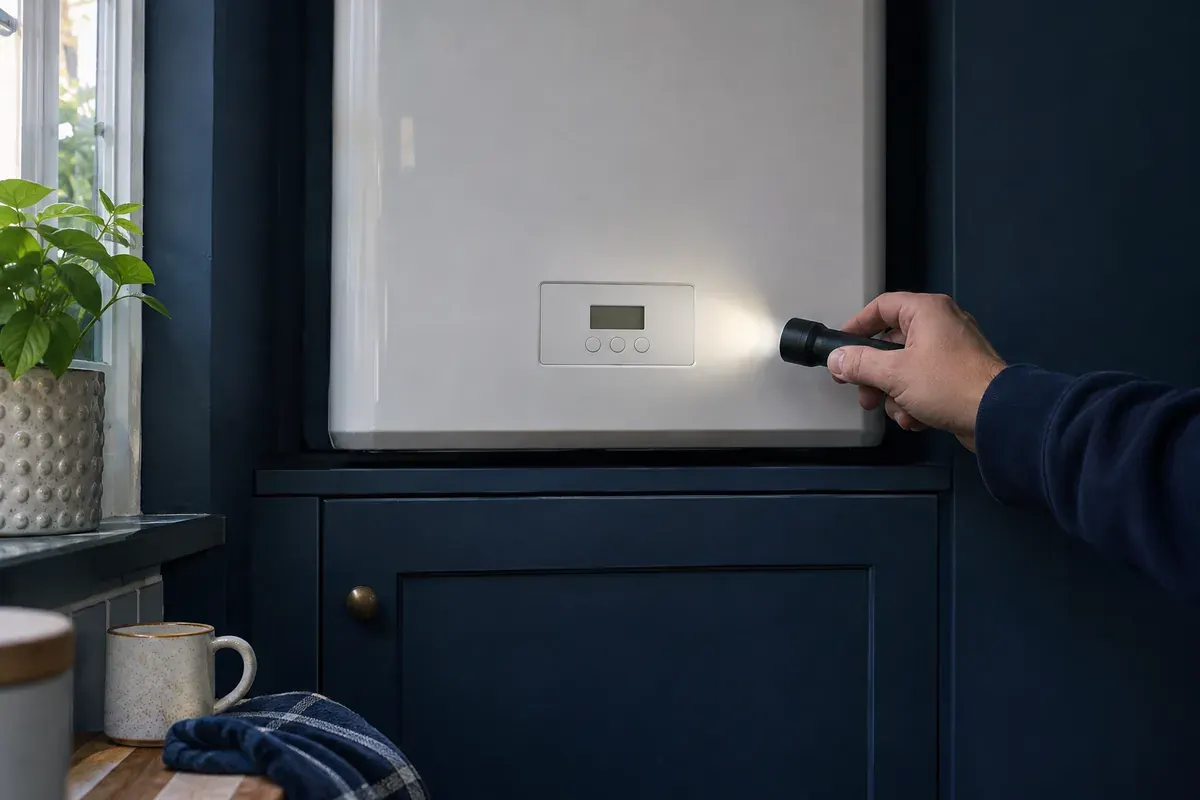
Confirm the gas and electricity supplies to the property are on, look at the timer and room thermostat settings and see whether a prepayment meter has credit. Read the pressure gauge if there is one and compare it with the range in the manual. Follow the manual for any reset it tells householders to use, and stop if the fault returns. Do not remove panels or adjust anything behind them.
Signs that mean switch off
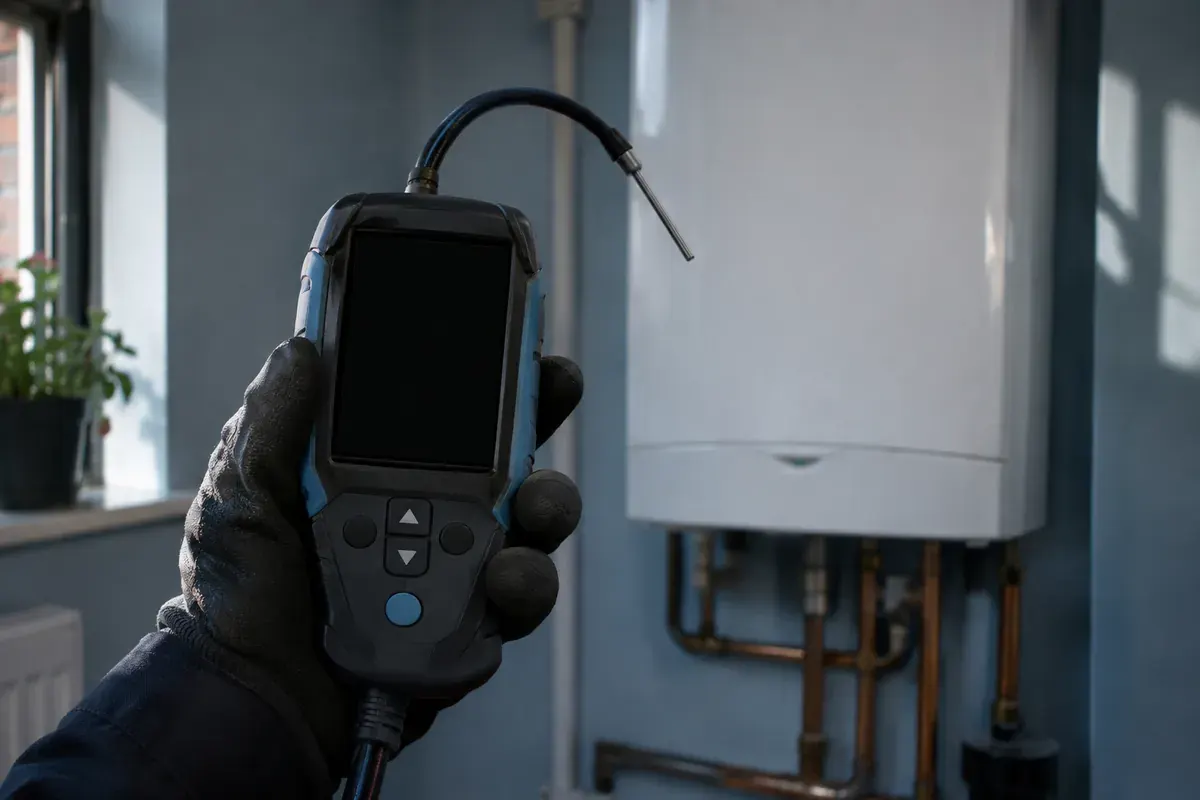
HSE lists warning signs of incomplete combustion, which can produce carbon monoxide: yellow or orange flames where they should be blue, soot or brown staining on or around an appliance, pilot lights that keep going out and more condensation than usual on windows. Headaches, dizziness, nausea or breathlessness indoors are reasons to get everyone into fresh air and seek medical help. It is illegal to use a gas appliance you suspect is unsafe.
What to put in your enquiry
- Boiler make and model, usually on a label or in the manual.
- The exact code or light pattern, and when it appeared.
- Whether the fault is constant or comes and goes.
- The pressure reading, cold, if your boiler has a gauge.
- Recent work: a new radiator, a power flush, decorating or a power cut.
- The date of the last service, if you know it.
Photos of the boiler front, the display and the pipes below can be emailed once the enquiry has gone, quoting the reference.
Checking who attends
Ask to see the engineer's Gas Safe ID card when they arrive. The back shows which kinds of gas work the holder is qualified for, and the licence number can be checked on the Gas Safe Register. HSE explains how to check an engineer.
Repair or replacement
Ask what has failed, whether the part is still made for your model and what else was noticed while the boiler was open. An old appliance with a hard-to-source part may make a replacement worth pricing alongside the repair. Get both options in writing before choosing.
Questions people ask
Can I take the cover off to look?
No. Leave the casing, the gas pipe and the flue to a Gas Safe registered engineer. Reading the display and checking the controls is as far as a householder should go.