No hot water from an immersion heater, a tripping circuit or a drip at the boss: safe checks, details of the element to note and who handles each part.
An immersion heater is an electric element screwed into a hot water cylinder, either as the only heat source or as a back-up to the boiler. When it fails, the cause may be the element, its thermostat or cut-out, the flex, the switch or the circuit feeding it. Cylinder specialists are available; electrical testing and circuit work need a competent electrician.
Safe checks
- Is the wall switch on, and is any timer calling for heat?
- Has the breaker or fuse for that circuit tripped?
- Is there water, scorching or a burning smell around the top of the cylinder?
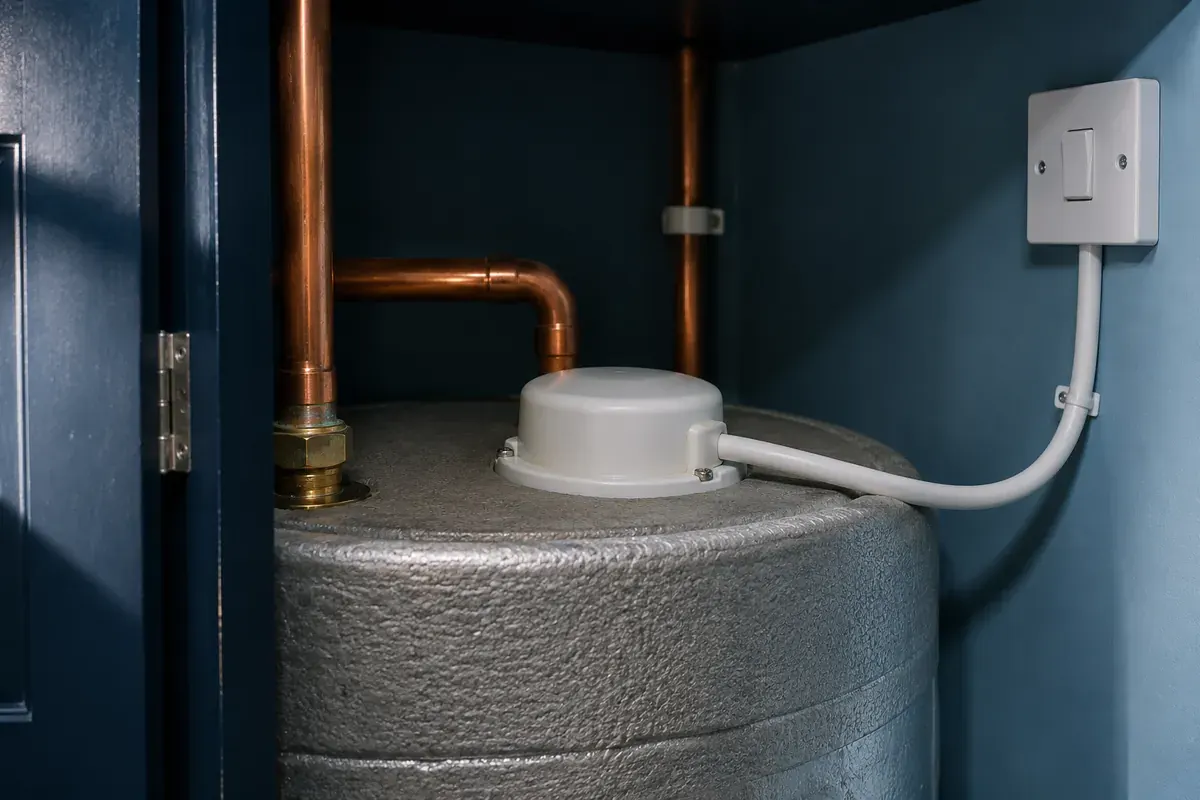
If there is scorching, a smell or a drip near the terminal cover, switch off at the consumer unit when the route to it is dry and leave the cover in place. Do not remove it to press a reset or test a part yourself.
Which cylinder is it in?
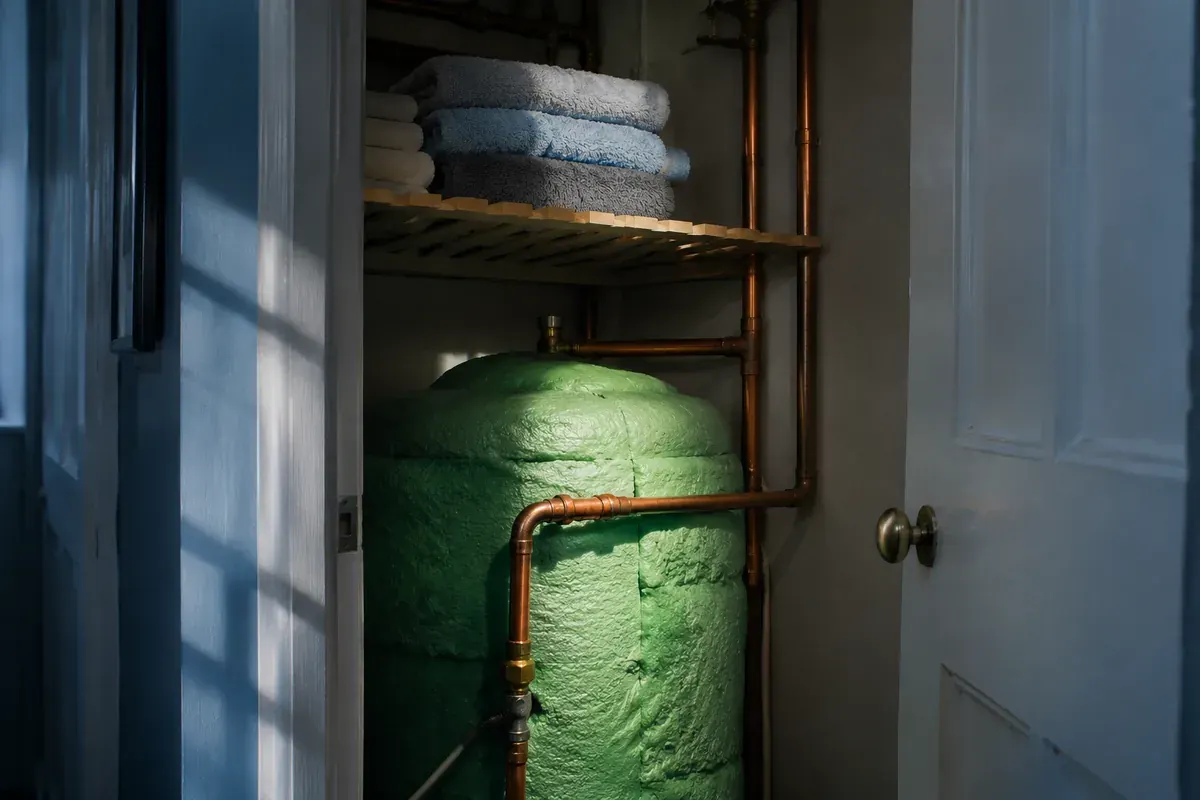
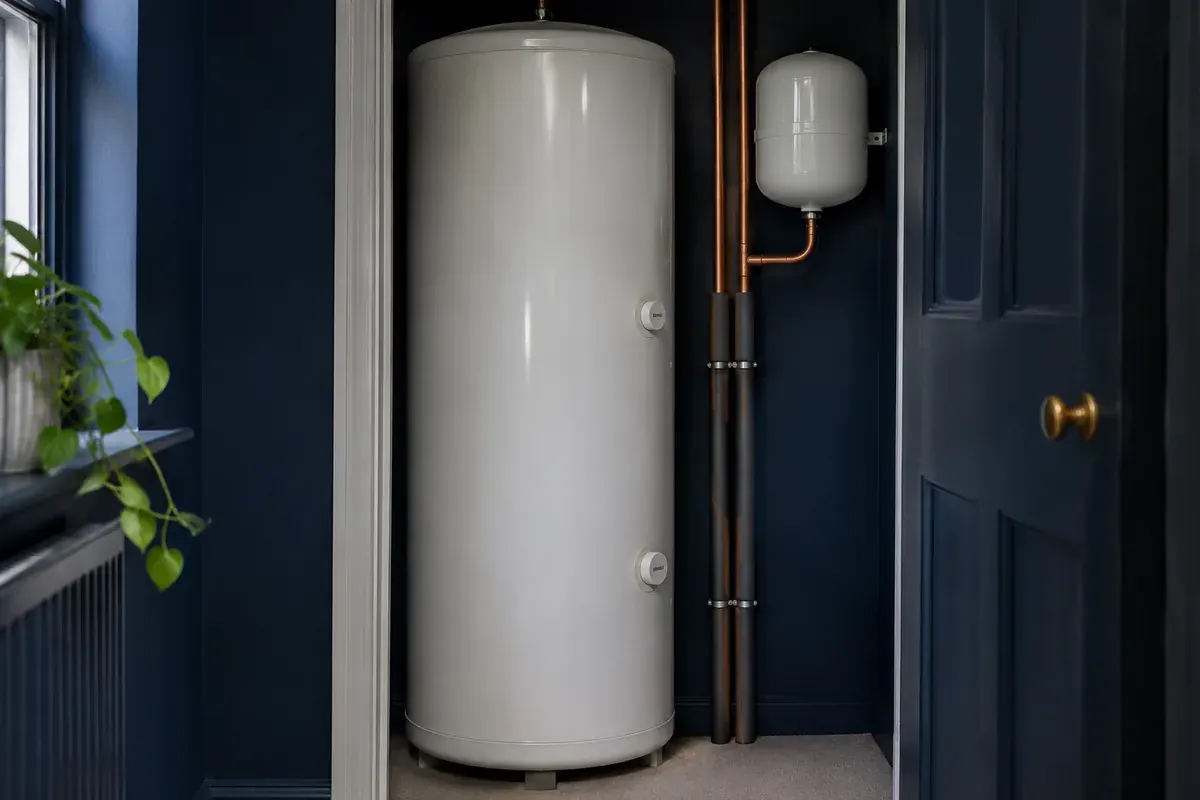
This decides who can attend. On a vented cylinder the element sits in tank-fed water. On an unvented cylinder the heater and its cut-out form part of the safety system, so the work goes only to G3 qualified engineers and the part must suit that cylinder. Using the wrong element or a thermostat without the correct cut-out removes a protection against overheating.
Parts to identify
| Detail | Where to find it |
|---|---|
| Cylinder make and model | Label on the casing |
| Element length | Old invoice, label or manual |
| Rating in kilowatts | Element cap or manual |
| Top or side entry | Visible position of the boss |
| One element or two | Count the covers and switches |
Approved Document G refers fixed immersion heaters to BS EN 60335-2-73, so ask for a part made to that standard.
What replacement involves
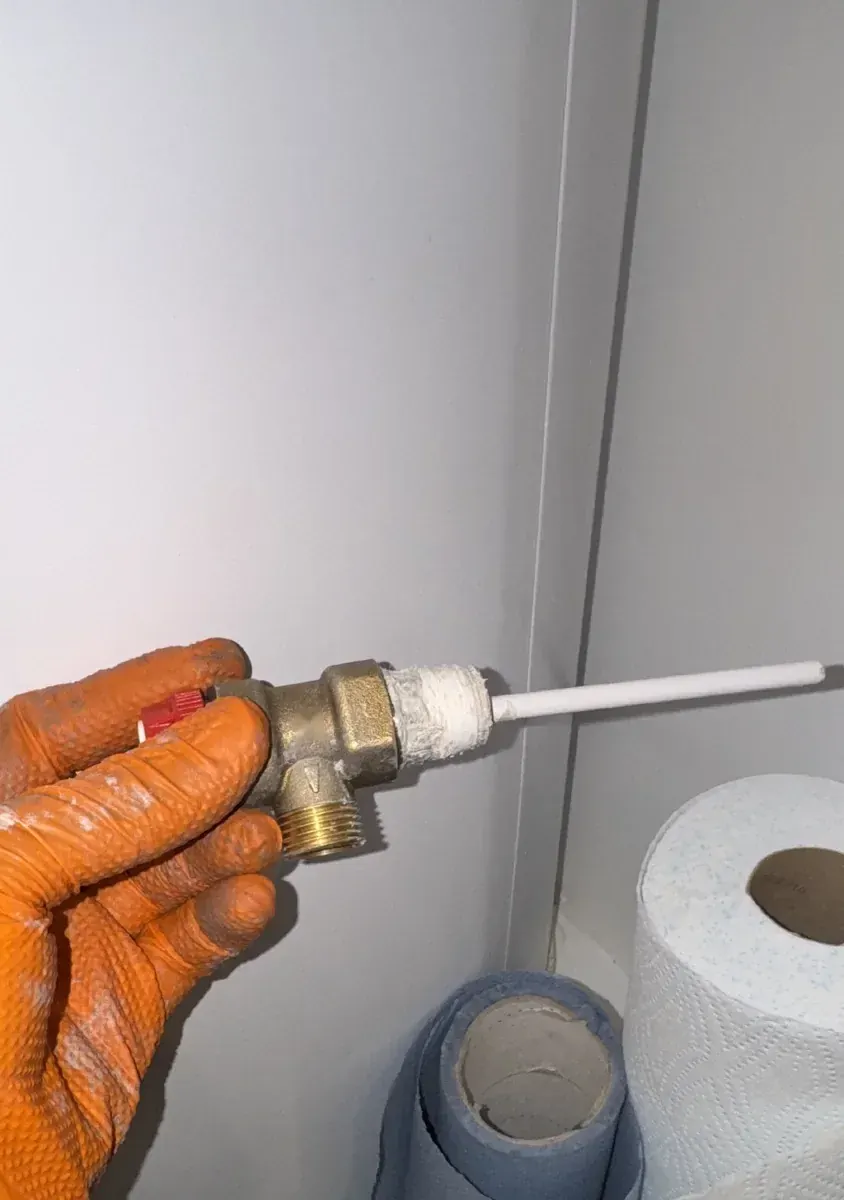
Power is isolated and proved dead, enough water is drawn down for the element to come out without flooding the cupboard, the old boss is loosened, and the new element goes in with a fresh seal. A boss that has seized needs care, since forcing it can distort or tear an old copper cylinder. Ask in advance what happens if it will not move. The cylinder is filled completely before power returns, because an element run dry is quickly destroyed.
Hard water
Much of London has hard water, and Thames Water explains how to check hardness for an address. Scale on an element slows heating and can make it fail early. If the old one comes out heavily coated, discuss a type intended for hard water and look at the cylinder at the same time.
What to send
The postcode, the cylinder type if known, a photo of the label and the top of the cylinder emailed with your reference, what stopped working and whether the boiler still heats the water. Do not take covers off for the photograph.
After fitting
Check that hot water arrives, the seal stays dry after a full heating cycle, the switch and timer operate and the thermostat setting has been confirmed. Water stored too cool carries a Legionella risk, and water that is too hot can scald; HSE explains the temperature side.
Questions people ask
The immersion keeps tripping the fuse board. Should I reset it again?
No. Leave it off. Repeated tripping needs an electrician or a competent person to test the element, flex and circuit before it is used.