Adding or repairing a garden tap: backflow protection, an indoor shut-off, frost precautions, the photos to send and the tests made once water is back on.
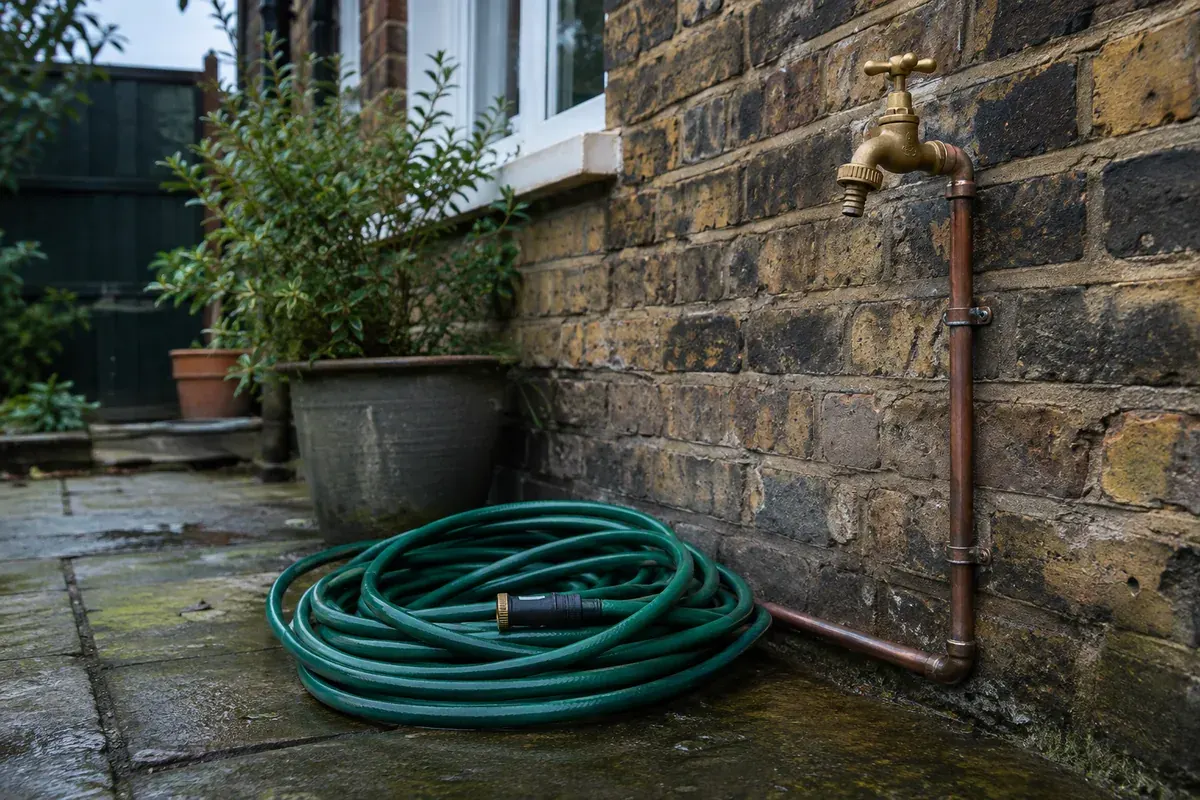
An outside tap needs a supply branch, a way through the wall, protection against dirty water being drawn back into the mains and a means of shutting it off indoors. Repairs deal with the same parts after weather and use have taken their toll.
What the job involves
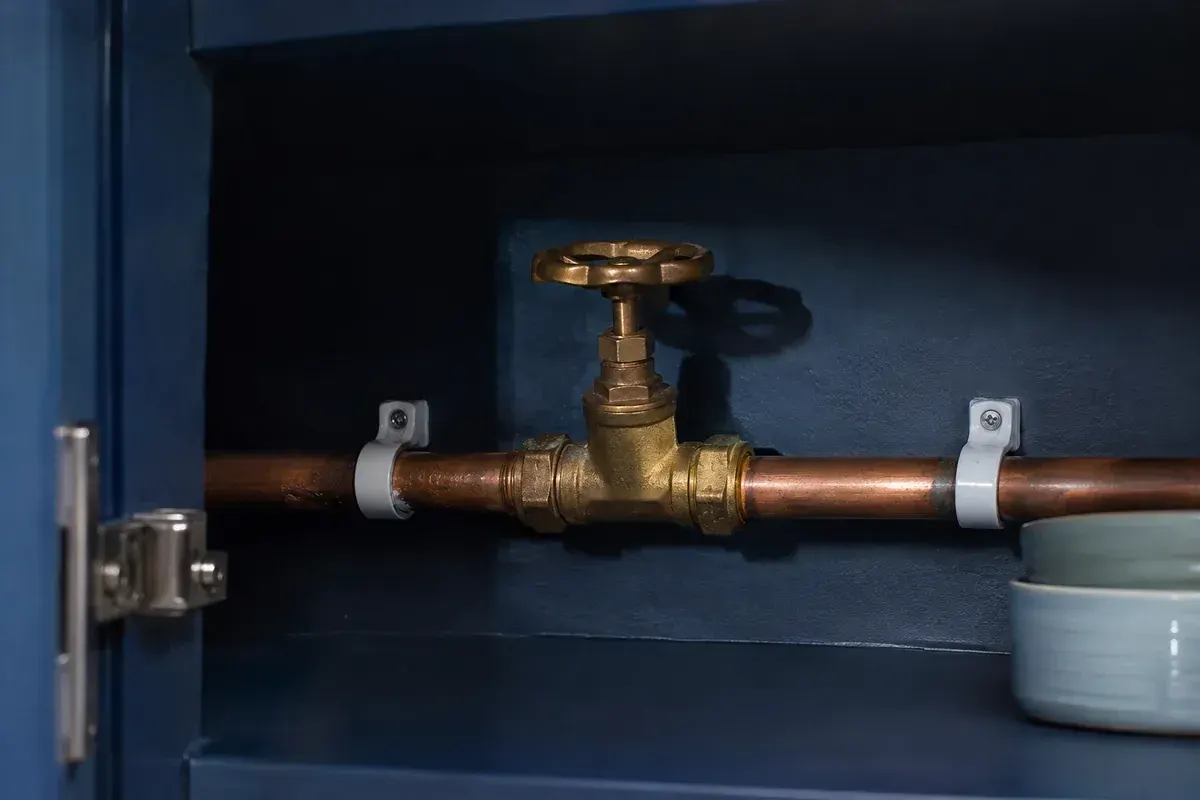
For a new tap, the nearest suitable cold pipe is identified and a branch is taken from it. An isolating valve goes where it can be reached inside, followed by backflow protection suited to the use. The pipe passes through the wall in a sleeve, the opening is sealed and the tap is fixed on a backplate. A repair might renew a washer, a whole tap, a split pipe or a failed check valve.
Backflow protection is a requirement under the water fittings rules. The right device depends on what the hose will do. Where a double check valve suits the use, Water Regs UK says that in premises built after 1 July 1999 it belongs inside the building, protected from frost if necessary. Chemical sprayers and irrigation carry different risks, described further in irrigation backflow protection.
What we need from you
- A photo of the outside wall where you want the tap, with some surrounding view.
- A photo of the pipes on the inside of that wall.
- Wall type if known: brick, render, timber frame or clad.
- What the tap will supply: watering can, hose, pressure washer or irrigation.
- Whether ground level outside differs much from the floor inside.
For rented homes or external walls managed by someone else, obtain permission before a hole is made.
Safe first steps
If an outside tap or its pipe is leaking, close the indoor valve for that branch, or the stop valve, then open the outside tap to release water. Do not pour boiling water on a frozen fitting or use a flame. Before anyone drills, point out sockets, meter boxes, flues and known cable routes near the position.
How it is checked
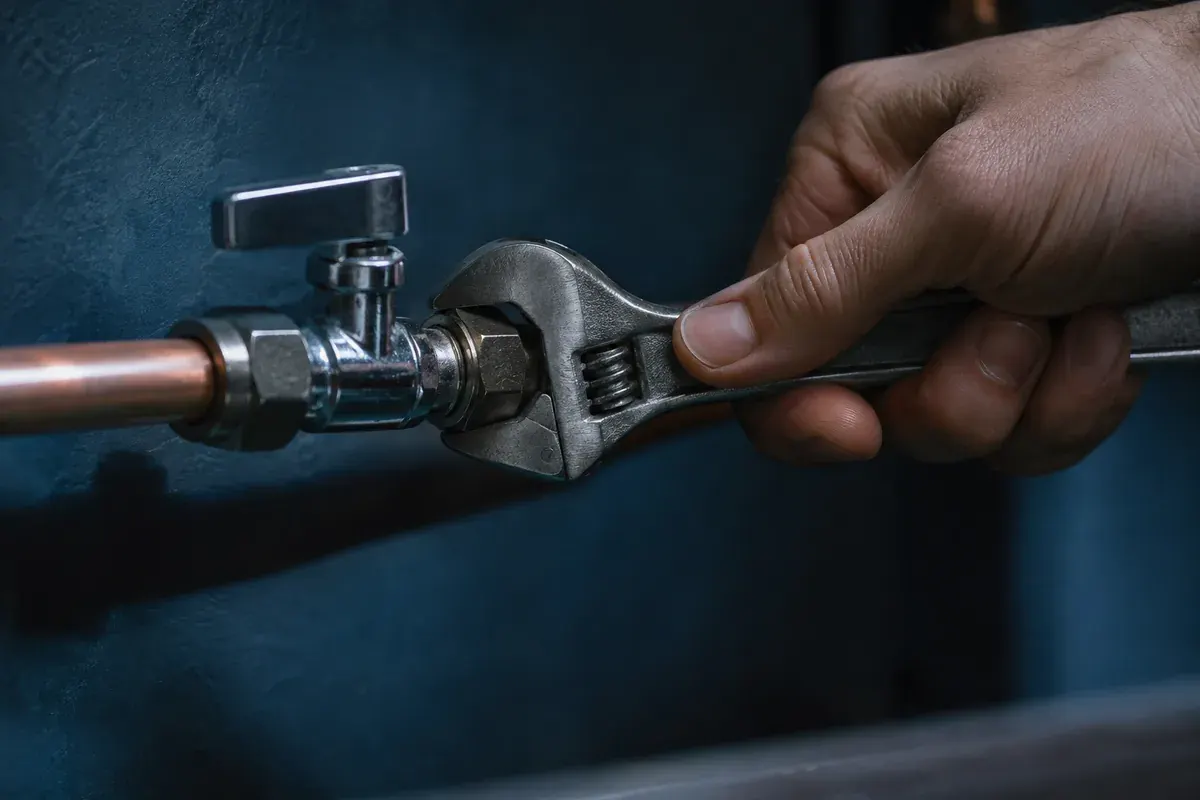
The indoor valve is opened gradually, joints are inspected on both sides of the wall and the tap is run and closed several times. The valve is then shut with the tap open to prove that it isolates. The fall of the pipe, sealing around the sleeve and security of the backplate are confirmed. Look inside the wall area again after the first week of use.
Other outdoor water jobs
Related outdoor work includes backflow protection for irrigation, water butt overflows, hot tub filling and draining, water and waste to a garden room, a garage toilet or sink and a dog washing station.
Repairing an existing tap
Say where the water appears: the spout, the spindle, the thread into the wall plate or the wall itself. Dampness indoors behind the tap points to the branch pipe and needs the supply closing without delay. A tap with no indoor shut-off or visible backflow protection is worth mentioning, so both can be considered during the repair.
Winter care
Disconnect the hose, close the indoor valve, open the outside tap and leave it open through freezing spells. Insulate exposed pipe and fit a cover. In spring, close the tap before reopening the valve and watch for splits. Add the job to the contact form.