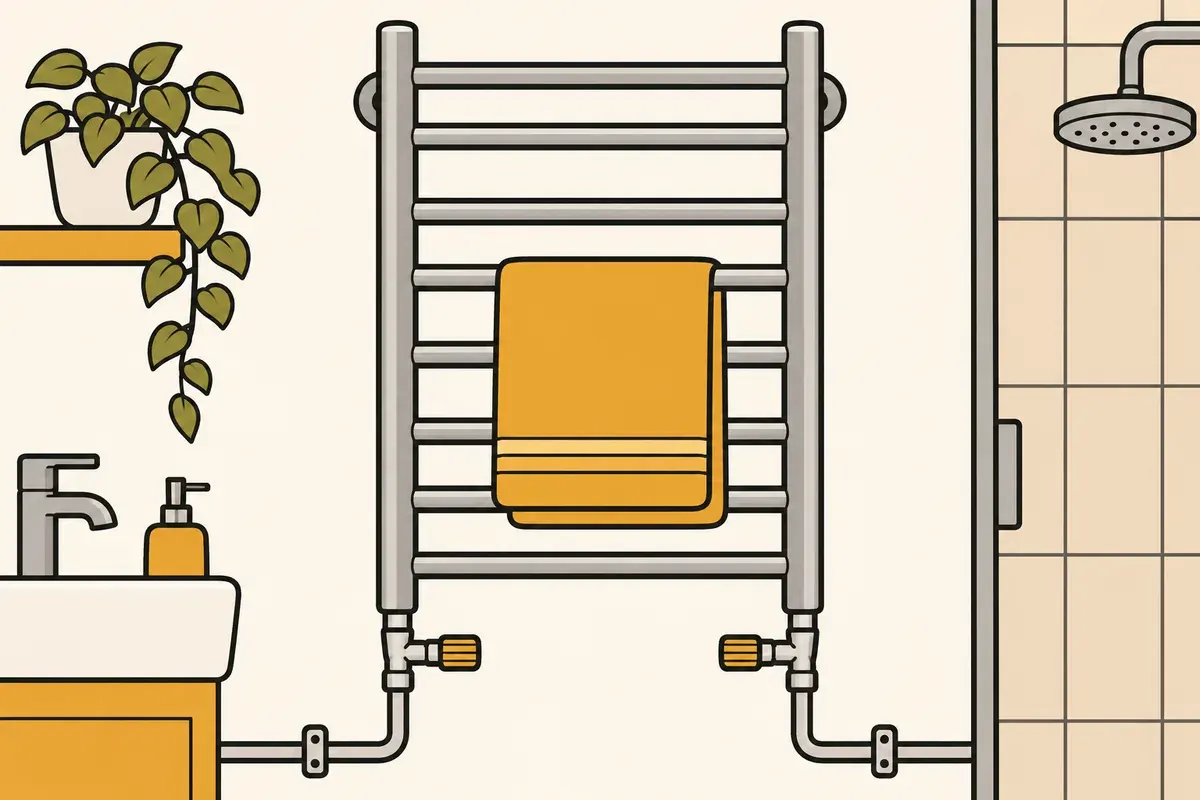
Electric towel rail installation covers sealed electric and element-filled rails: fixed wiring, bathroom zones, filling for expansion and who should connect it.
An electric-only towel rail is mostly an electrical installation with a wall fixing job attached. Have a competent electrician provide and connect the supply, check the rail is suitable for the position in the bathroom, and never power an element in a rail that is not correctly filled.
Two kinds of rail
Factory filled or dry electric rails arrive sealed with their heater. They are hung and wired; no heating pipes are involved.
Element kits fit into an ordinary towel radiator that is then filled and capped. A dual fuel version keeps the heating connections and adds the element for summer use.
Bathroom position
Stelrad's electric towel radiator instructions say to install that appliance outside zone 1 in rooms with a bath or shower, with controls that cannot be touched by someone in the bath or shower, and not to connect it with a plug. Zone rules and ratings depend on the product, so the electrician should check yours against the room.
Electrical Safety First advises that bathroom circuits are protected by an RCD and recommends a registered electrician for installation work.
Under regulation 12, new circuits and alterations in the special location around a bath or shower are notifiable in England.
Filling an element rail
Stelrad's element kit instructions say:
- the element goes in the bottom of the radiator;
- the element size must match the rail;
- fill to about 90 per cent with water to leave room for expansion, in their electric-only method;
- never switch on an empty radiator.
Instructions from other makers may specify inhibitor, a glycol mix or a different fill level. Use the one for your parts. In a dual fuel arrangement, closing both radiator valves while the element runs removes the path for expansion, so follow the stated valve position exactly.
Fixing to the wall
A filled rail is heavy. Mark bracket positions with the cable outlet in mind, check behind the wall for pipes and cables, and use fixings for the wall construction. Position the control where it can be reached.
Who does what
| Task | Person |
|---|---|
| Confirm location suits the rating | Electrician |
| Supply, fused connection, testing, certificate | Electrician |
| Hang and level | Installer |
| Fill and cap an element rail | Installer following the sheet |
| Disconnect old heating pipes | Plumber |
If an existing heated rail is being removed from the central heating, the pipes must be capped properly and the system drained and refilled. That is covered in radiator replacement.
Check before buying
- Wattage and the surface temperature behaviour.
- Timer or thermostat control.
- Ingress protection rating.
- Cable exit side.
- Wall space and door clearance.
Living with one
Towels covering the whole rail reduce airflow, and some makers restrict how it may be covered, so read that section of the leaflet. A timer limits running hours when the rail is used only to dry towels. Do not hang on it or use it as a support when getting out of the bath. Wipe it with a soft cloth when cold, keeping water away from the control and cable outlet. Keep the instructions, since the element rating matters if it is ever replaced.
Faults
No heat, a tripping device, water at the element or discoloured wiring means isolate it and call the right person. Do not refit a damp element.
For the plumbing part of a changeover, outline it in the contact form and email photos of the current rail and valves. Electrical connection should be arranged with an electrician.