Leaks, lukewarm water or an ageing hot water cylinder: how vented and unvented types differ, what to photograph and the safe steps to take before a visit.
Cylinder work covers the stored hot water side of a home: the tank itself, its water connections and the pipes around it. The type of cylinder determines what can be touched and by whom, and cylinder specialists are available for each kind.
| Your question | Page |
|---|---|
| Mains pressure cylinder, relief valves, tundish | Unvented cylinders |
| Tank-fed cylinder with a loft cistern | Vented cylinders |
| Electric element not heating, tripping or leaking | Immersion heaters |
Which type do you have?
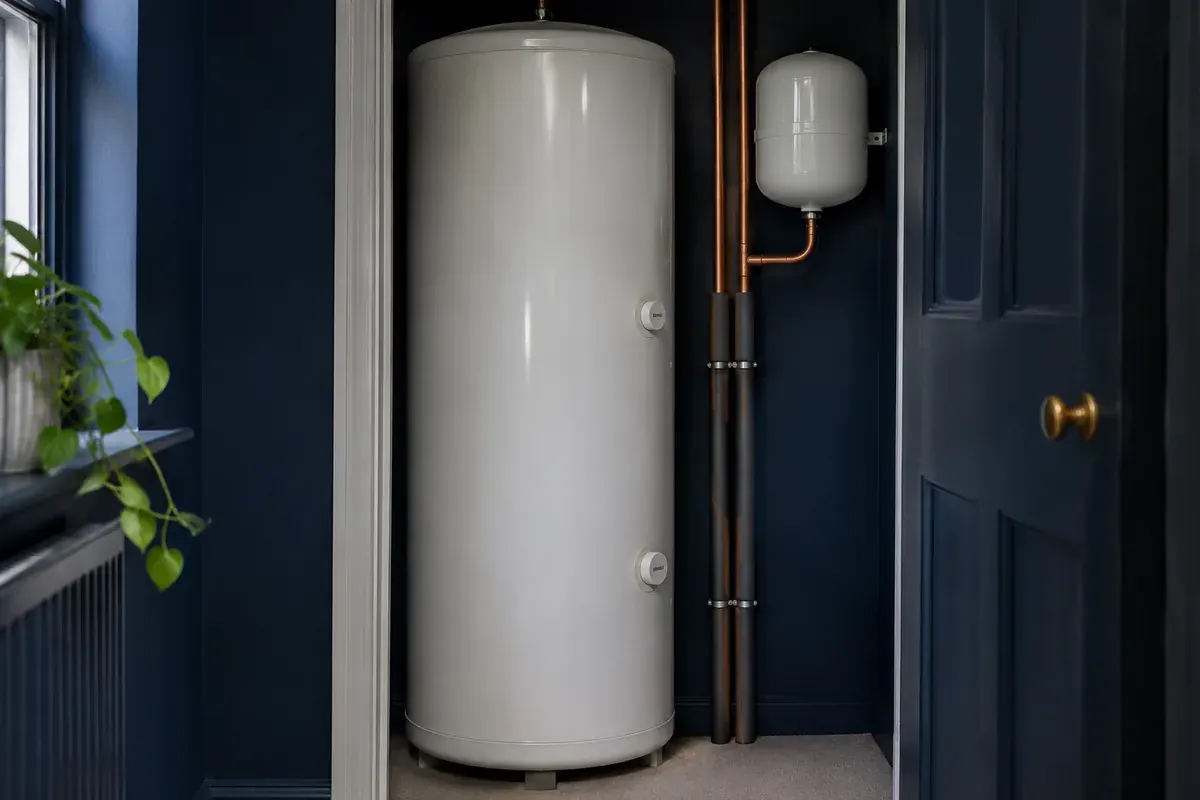
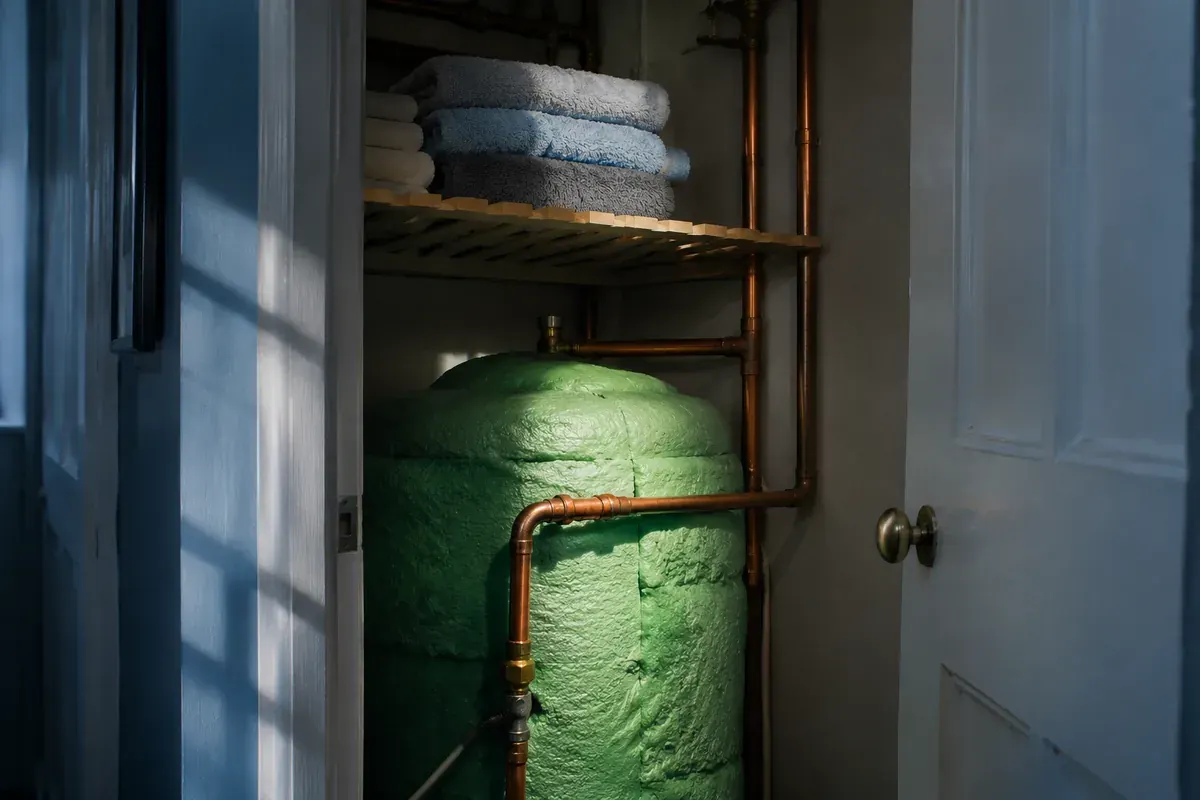
A vented cylinder is usually fed by a cold storage tank at a higher level and has an open pipe rising to discharge over it. An unvented cylinder is fed from the mains, and normally carries a label, relief valves, an expansion arrangement and a discharge pipe leading to a drain point. Photograph the label either way.
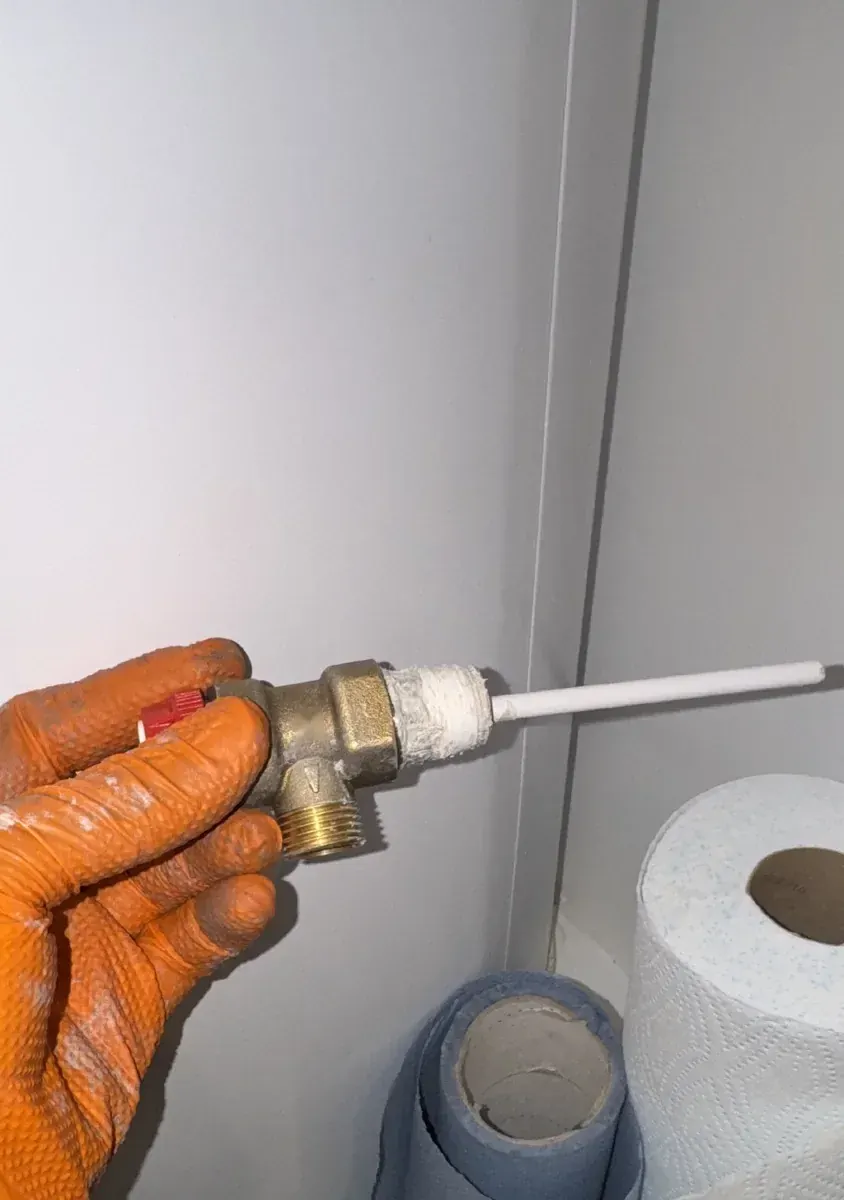
Unvented systems are controlled work with serious hazards if safety parts are altered, blocked or removed, and Approved Document G sets out requirements for them. Tell us if yours is unvented. Work on it goes only to G3 qualified engineers.
What the job involves
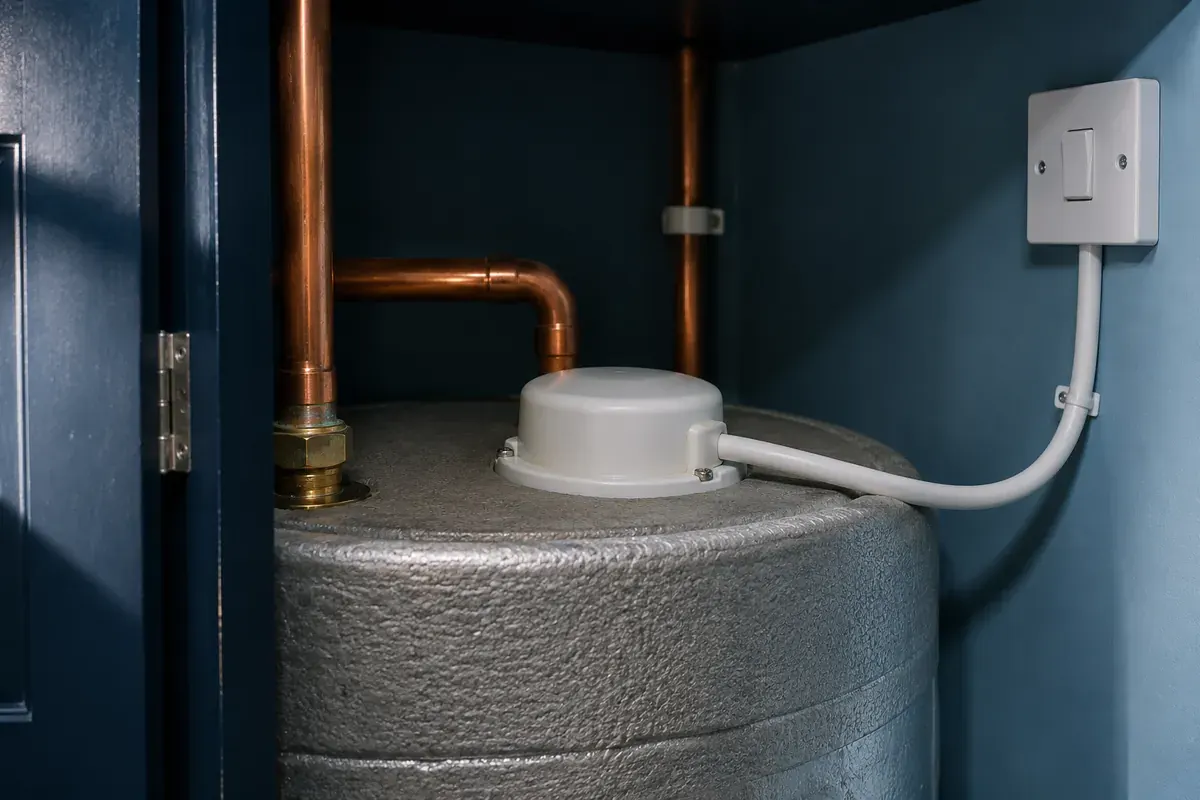
Typical requests are a leaking connection, a faulty drain or isolating valve, poor hot water flow, a failed immersion heater or replacement of a vented or unvented cylinder. Replacement means isolating, draining, disconnecting, checking that the new unit suits the space and connections, then refilling before any heating source is turned on. Immersion heater wiring and controls are electrical work. Where a gas boiler feeds the coil, any work on the boiler or its gas supply is done only by a Gas Safe registered engineer.
What we need from you
- Photos of the full cylinder, label, top and bottom pipes and cupboard.
- Height, diameter and how it is heated.
- The symptom: cold, too hot, leaking, noisy or slow.
- Where the feed tank is, if there is one.
- Any recent service record.
Safe first steps
Switch off the immersion heater at its isolator and turn off the heating source at its normal control. For a leak, close the cold feed to the cylinder if you can identify it. Water that is scalding, steaming or discharging continuously from a safety pipe needs urgent attention from someone suitably competent; keep away and do not cap or plug that pipe.
Never run an immersion heater on an empty cylinder.
How it is checked
After refilling, hot taps are run until air clears, joints are inspected cold and hot, and the thermostat setting is confirmed by whoever is responsible for the electrical or heating control. HSE guidance on Legionnaires' disease explains why stored water temperature matters, while very hot water at outlets brings a scald risk.
Before agreeing
Ask who will handle the electrical connection, how the old cylinder is removed and how long the home will be without hot water, as an answer for your own job. Describe it in the contact form.
Repair or replace
A weeping fitting on a sound cylinder can often be dealt with by itself. Seepage from the body or a welded seam is a different matter and usually points towards a new unit. When comparing replacements, check connection positions as well as capacity, because a similar size can still need pipes to be moved.
Who does unvented work
Unvented cylinder work is carried out only by G3 qualified engineers. Ask the person attending to show evidence of that qualification before the work begins.