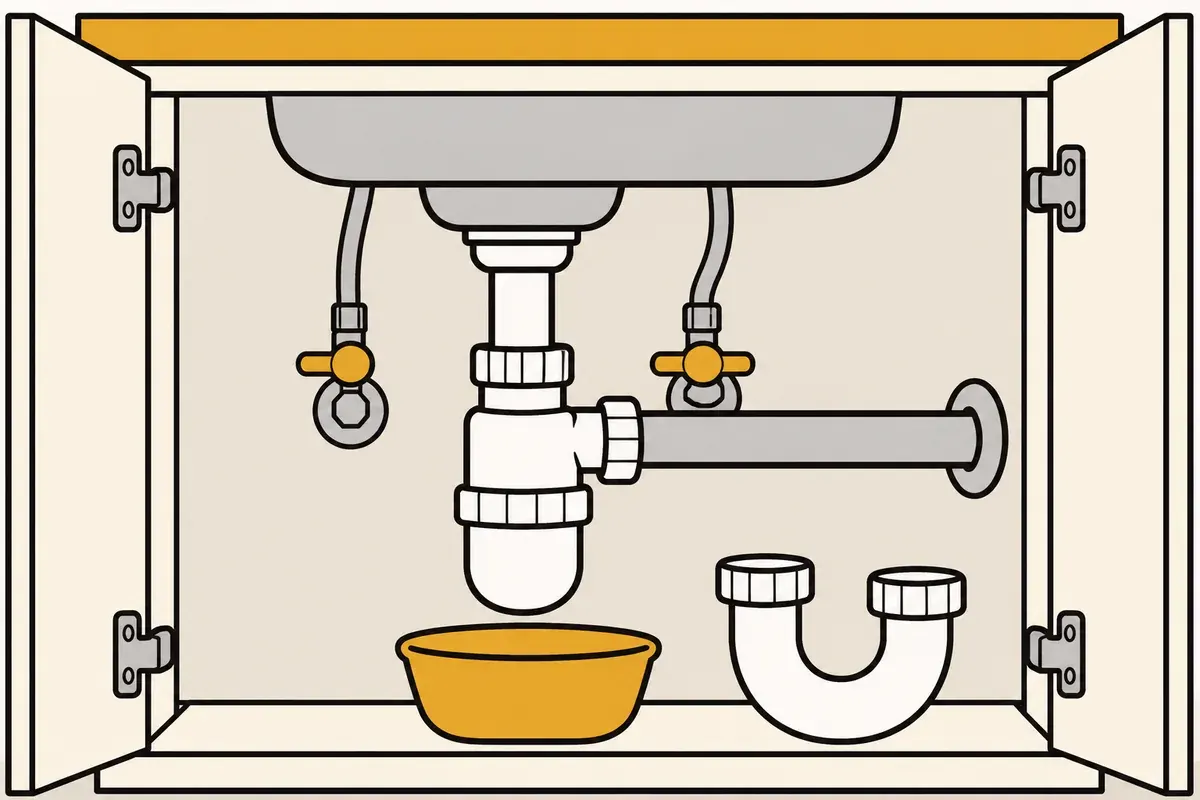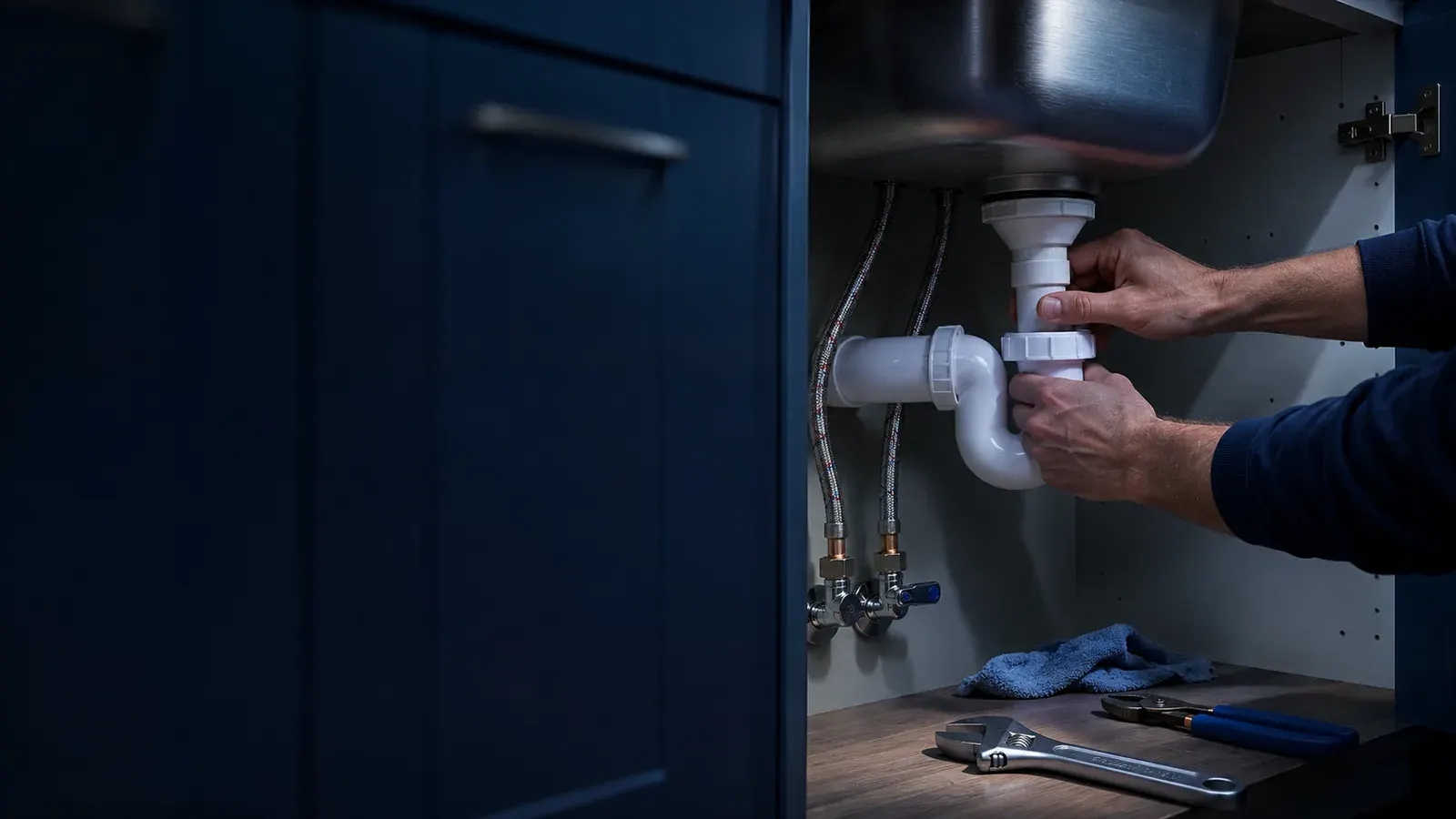
Basin waste replacement made clear: slotted or unslotted, clicker or lever pop-up, trap connections, sealing the flange and testing the overflow afterwards.
Basin waste replacement means changing the fitting through the bottom of the bowl, including the plug or pop-up mechanism, then resealing and reconnecting the trap. The key choice is whether the basin has an overflow.
Pick the correct body
A basin with an overflow needs a slotted waste so overflow water can drain away. A basin without one takes an unslotted waste. Crosswater also sells universal wastes described as fitting either type.
Next choose the operating style:
- Plug and chain: simple, with the chain anchor to consider.
- Clicker: press to open and close; usually no linkage under the basin.
- Lever pop-up: a rod behind the tap moves the plug through linked parts.
- Free-flow: stays open, which can suit some basins but removes the ability to fill them.
Check flange diameter, tail length and bowl thickness. Countertop and integrated basins can need a particular fitting.
What is involved
- Inspect the outlet for cracks and note the overflow.
- Disconnect the trap and any pop-up linkage.
- Remove the old backnut while preventing the basin from moving.
- Clean old sealant from both contact surfaces.
- Fit seals in the order shown by the new maker.
- Align the slot with the basin overflow passage.
- Tighten carefully, reconnect and test.
Ask whether the replacement covers only the waste or also a trap, tap rod hole or damaged basin. Parts and price basis should be agreed beforehand.
Seals and basin material
The product may use a shaped washer above and a sealing washer below. Follow its instructions about any sealant. A compound unsuitable for stone or a coated surface can mark it. Do not rely on a thick smear to compensate for a missing washer or a damaged outlet.
Trap connection
The new tail must reach the trap without strain. Approved Document H lists a 32 mm minimum washbasin trap and normally a 75 mm seal, with a limited exception for certain flush grated wastes on spray-tap basins. If an old trap does not match, use the correct parts instead of forcing threads.
Test two paths
Close the new waste and add water. Check that it holds. Open it and watch the underside. Then, if there is an overflow, let a controlled amount enter the overflow while watching the joint. This second test matters because a dry joint during ordinary draining can still leak when overflow water passes through the slot. Dry the area and check again later.
DIY or booked help
It can be a manageable job with open pedestal or cabinet access. Stop if the backnut is corroded to a fragile ceramic basin, the basin shifts on the wall, the pipe has no slack or the connection is concealed. A blockage deeper in the drain will not be cured by a new pop-up mechanism.
Describe the job in the contact form, then email one photo inside the basin, one of the overflow and one underneath, quoting your reference. If you are also replacing the bowl, see basin fitting.
Questions people ask
How do I know whether I need a slotted waste?
If the basin has an overflow, use a slotted waste. A basin without one takes an unslotted waste. Check the instructions if the product is sold as universal.
Can a lever pop-up become a clicker waste?
Often, but check what happens to the lever rod and the hole or tap that carried it.