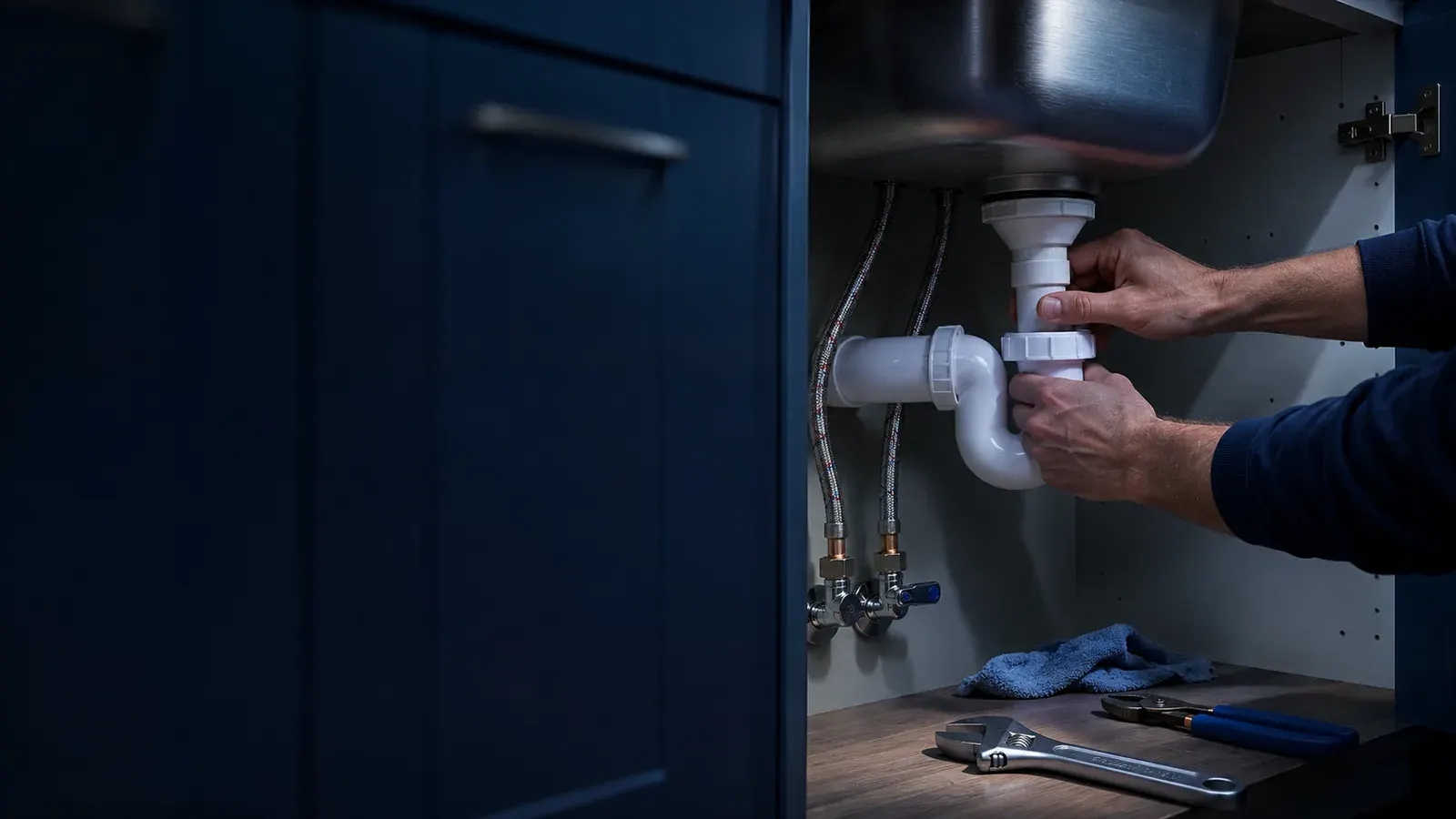
Fitting service valves to taps: choose valve type and size, isolate the mains, cut and fit cleanly, orient the handle, test and label for future repairs.
A service valve is a small shut-off on the pipe feeding a fitting, so a tap can be repaired without turning off the whole house. Fit one on each supply, close to the tap, accessible and facing the right way.
Rules
The water fittings requirements say systems must be able to be drained and have enough servicing valves and drain taps to minimise water lost during maintenance. Toilet flushing cisterns and storage cisterns need a servicing valve on the inlet, next to the cistern. Storage cisterns, other than those feeding a heating primary circuit, also need one on the outlet. Separately, each home needs its own conveniently placed stop valve, and where one pipe serves several homes every occupier must have access to the shared one.
Types
| Valve | Use | Note |
|---|---|---|
| Quarter turn slotted | Neat, operated with screwdriver | May need a tool in the cupboard |
| Lever or tee handle | Quick to use | Takes more space |
| Combined with flexible hose | Saves joints | Check approval and bore |
| With integral check | Backflow protection only to the rating of its check | Direction matters |
Pick the bore with flow in mind: reduced-bore valves restrict low pressure gravity supplies, so use full bore there. Choose approved fittings for drinking water.
Position
Choose a straight pipe length with room for two spanners, away from the bowl and drawers. Ensure the handle or slot faces forward. Mount before the flexible hose, not after it. Avoid concealed joints.
Before starting
Find the stop valve and the hot supply isolation. Thames Water says the inside valve is usually where the pipe enters, turns clockwise to close and should not need excessive force. In a flat there may be a communal valve. Confirm that water has stopped by running taps. Know pipe material and size: 15 mm copper is common; older imperial pipe needs different fittings. Lead pipe should be handled by someone competent.
Fitting steps
- Drain the pipe.
- Mark the cut, allowing for insertion depth.
- Cut square with a pipe cutter and remove burrs inside and out.
- Fit the compression nut and olive, or push-fit insert as the product requires.
- Seat the pipe fully.
- Tighten while holding the valve body, following the maker's guidance.
- Close the valve.
- Restore water slowly and check each side.
For compression joints see making a compression joint. Soldered valves need heat shields and removal of seals; avoid flames near cabinets.
Test
Open the new valve, run the tap, close the valve with the tap open and confirm flow stops. Inspect all joints with dry paper now and next day.
Label
Mark hot and cold, and tell the household where they are.
When not to attempt
Stop if the main stopcock will not close, pipes are corroded or hidden, the supply is shared or you cannot drain safely. Gas pipes look similar to water pipes in some homes; never cut an unidentified pipe, and leave gas work to a Gas Safe registered engineer.
Booking
Describe the number of valves, pipe positions and tap type on the contact form and email photos with your reference. Adding valves while another job is open usually saves a separate drain down.
Adding valves during other work
When a kitchen or basin is already open, fitting valves to nearby appliance and cistern supplies costs little extra time. Ask for a list of what will be added and where. In a flat, a valve that isolates the whole home as well as the individual fitting is helpful, since communal shut-offs can be hard to reach. Operate each valve now and then so that it does not seize, and check for weeping at the spindle afterwards. For the main inside stop valve, Thames Water suggests a monthly check. A valve that has never been turned often refuses exactly when it is needed.
Cistern supplies
A toilet inlet usually enters at the side or underneath with limited space to the wall. Check that a valve with its handle will fit without fouling the pan or boxing.
Questions people ask
Where should the valve go?
On the supply near the tap, where you can reach and operate it without removing furniture.
Are valves compulsory?
The water rules require an adequate number of servicing valves, and certain fittings such as cistern inlets need one.