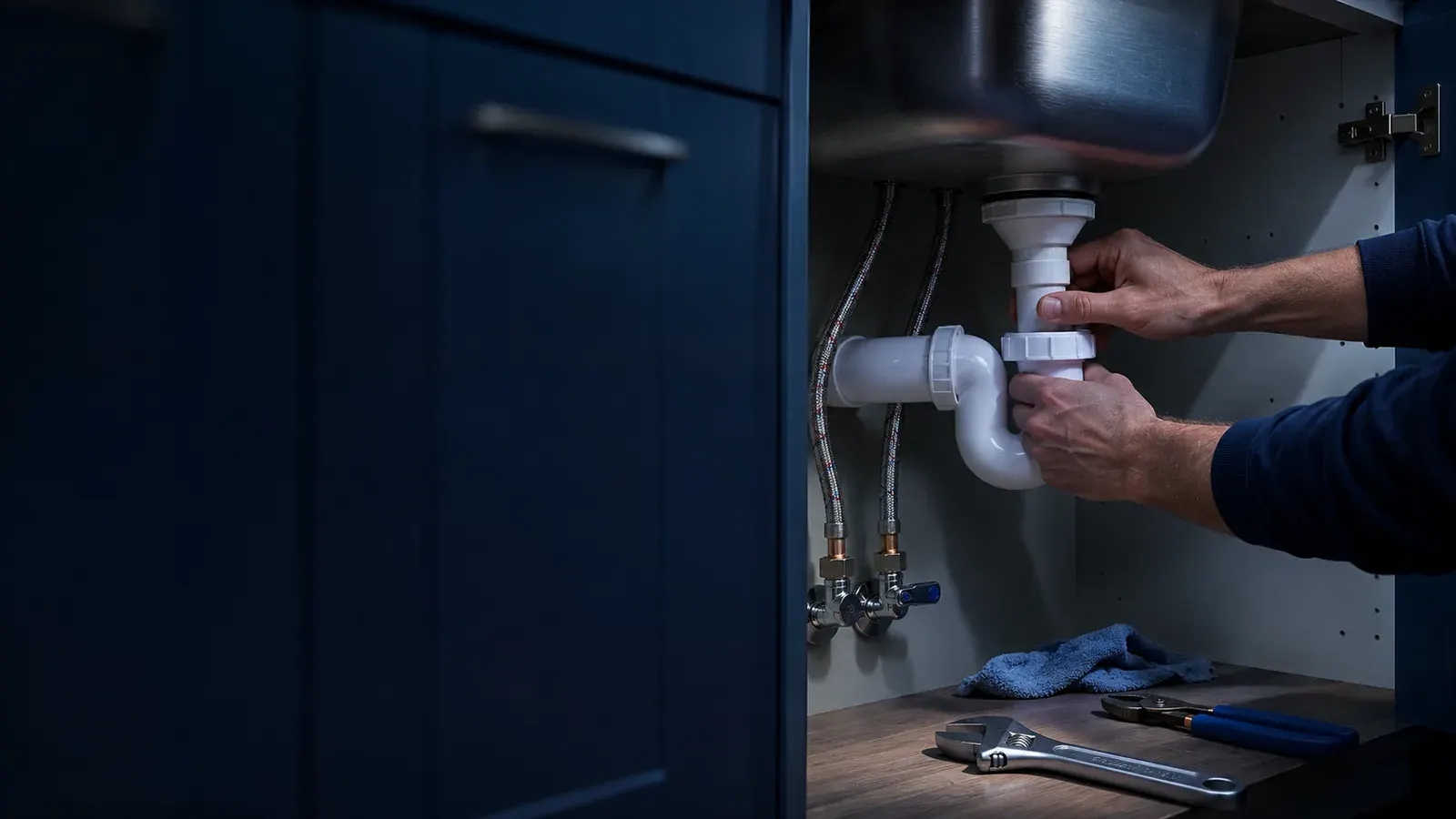
Imperial to metric pipe adapters for old copper: identify the size by measuring, choose compression, solder or push-fit converters and avoid wrong olives.
Old British copper in imperial sizes can be joined to metric pipe with purpose-made adapters, solder-ring converters or specific replacement olives. Measure the outside of the old pipe first, then use only fittings whose maker says they suit that size.
Identify the pipe
Clean the pipe and measure its outside diameter with calipers in two directions. Compare with the sizes you may meet: half inch and three quarter inch imperial are the common older domestic sizes, close to but not the same as 15 mm and 22 mm metric. Stamped markings or the age of the house help but do not replace a measurement. Old pipe can be oval or dented, which defeats seals.
Check it is not lead. Thames Water describes lead pipe as dull grey when unpainted, with rounded swollen joints, shiny silver metal under a gentle scratch and a dull thud when tapped. It advises against disturbing lead pipes. Seek competent help rather than cutting one.
Methods
| Method | Notes |
|---|---|
| Compression adapter or special olive | Use the exact size set by the fitting maker |
| Solder-ring or end feed converter | Needs heat and clean copper |
| Push-fit converter | Check the maker's imperial range |
Wavin's Hep2O imperial to metric adaptor sheet lists straight and elbow converters for half inch to 15 mm, three quarter inch to 22 mm and one inch to 28 mm. The imperial end is grey and the metric end white. It has copper cut with a wheel cutter, checked for burrs, pushed firmly home and tugged back to prove the grip, and it uses a pipe support sleeve in Hep2O plastic pipe. It also refers to separate nut and ring adaptors for compression connections. Each system has its own steps; follow them.
Preparing the pipe
- Isolate and drain.
- Cut square with a pipe cutter.
- Remove burrs inside and out.
- Inspect the end for scratches and ovality.
- Mark insertion depth.
- Fit inserts if the maker requires them for that material.
Making compression joints
Slide on nut and ring in the right order, push the pipe fully home, tighten by hand then a measured turn with two spanners as instructed. Do not crush an olive onto an undersized pipe. See making a compression joint.
Solder
Needs clean metal, flux suited to the job, lead-free solder for drinking water and heat protection. Remove plastic parts and valves' seals nearby.
Location
Keep any joint where it can be inspected; concealed joints are restricted. Support pipes with the right clips for their size.
Test
Restore water slowly, check under pressure for a day. A weep suggests the wrong size or damaged surface; remake rather than tighten forcefully.
Mixed systems
Record where imperial runs exist for future work. Replacing a short old section with metric during other work may be better than adding repeated adapters.
Gas
Copper can carry gas. Identify pipes before cutting; gas work is for a Gas Safe registered engineer only.
Help
Send pipe measurements and photos through the contact form, emailing a picture with calipers and quoting your reference.
When replacing the section is better
If the old pipe is dented, heavily corroded, painted over many times or buried so that only a short stub shows, an adapter may be sealing onto a poor surface. Cutting back to sound pipe or replacing the run removes the doubt. Where several imperial branches meet under one floor, plan a single transition at an accessible point and carry on in metric. Ask for the position of every new joint to be shown to you before boards are closed.
Buying parts
Take the measurement, the pipe material and a photo to the supplier. Ask for the manufacturer's statement that the fitting suits that imperial size, and keep the instruction leaflet. Do not mix rings from one brand with bodies from another unless the maker allows it. Buy a spare ring in case one is damaged during assembly, and discard any that has already been compressed onto a different pipe.
Questions people ask
Will 22 mm fittings fit 3/4 inch pipe?
Not reliably as supplied. Use the adapter or olive the fitting maker specifies for imperial pipe.
Is 1/2 inch the same as 15 mm?
They are close but not identical. Check the fitting maker's compatibility statement.