BSP thread sizes for taps and hoses: why names differ from ruler readings, measure outside diameter, match male and female threads and seal them correctly.
BSP names such as half inch or three quarter inch describe a pipe standard, not the thread's width. Measure the outside diameter of a male thread: Hozelock lists about 20.99 mm for half inch, 26.44 mm for three quarter inch and 33.25 mm for one inch.
Reference figures
From Hozelock's tap guide, which says the most common UK outdoor tap thread is three quarter inch, with some older taps half inch:
| Name | Approximate male outside diameter |
|---|---|
| 1/2 inch BSP | 20.99 mm |
| 3/4 inch BSP | 26.44 mm |
| 1 inch BSP | 33.25 mm |
A female thread is measured inside and will read slightly smaller than its mating male. Compare with a known fitting if unsure.
Where you meet them
Basin and bath tap tails, appliance hose couplings and outdoor taps may use different sizes in the same home, so measure each one. Mixer flexible tails often combine a metric stud at the tap with a half inch union or 15 mm compression below; see tail sizes. Always verify.
How to measure
- Clean the thread.
- Use calipers across the outer crests.
- Take two readings at right angles.
- Match to the table.
- For female threads, measure the inner crests and compare with a sample.
A tape measure is rarely accurate enough. Thread pitch gauges confirm between similar sizes, including some metric or imported threads.
Parallel and taper
Some BSP threads are parallel and seal with a washer against a flat face. Others taper and seal on the thread with tape or compound. Mixing them wrongly causes leaks or damage. Check the product description.
Sealing
| Joint | Seal |
|---|---|
| Flat face union or hose | Washer or fibre washer, no tape |
| Taper thread | Tape or approved compound |
| O-ring spigot | O-ring, light tightening |
For drinking water use approved materials. Start threads by hand; two or three turns freely shows they match. Stop if resistance appears at once.
Reducers and adaptors
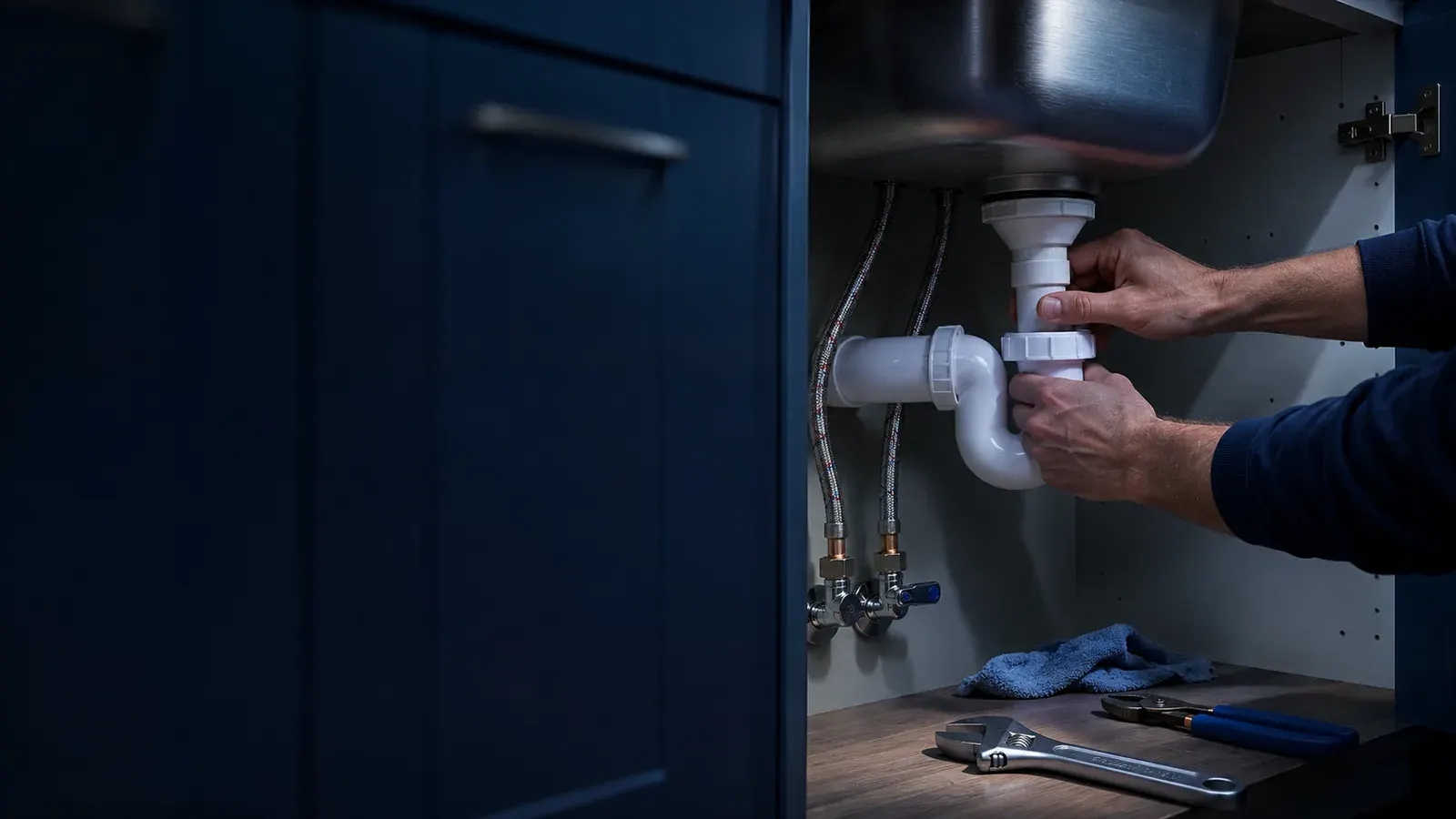
Brass adaptors convert sizes or genders. Use the fewest possible joints and support heavy assemblies. A stack of adaptors under a sink is a leak risk.
Examples
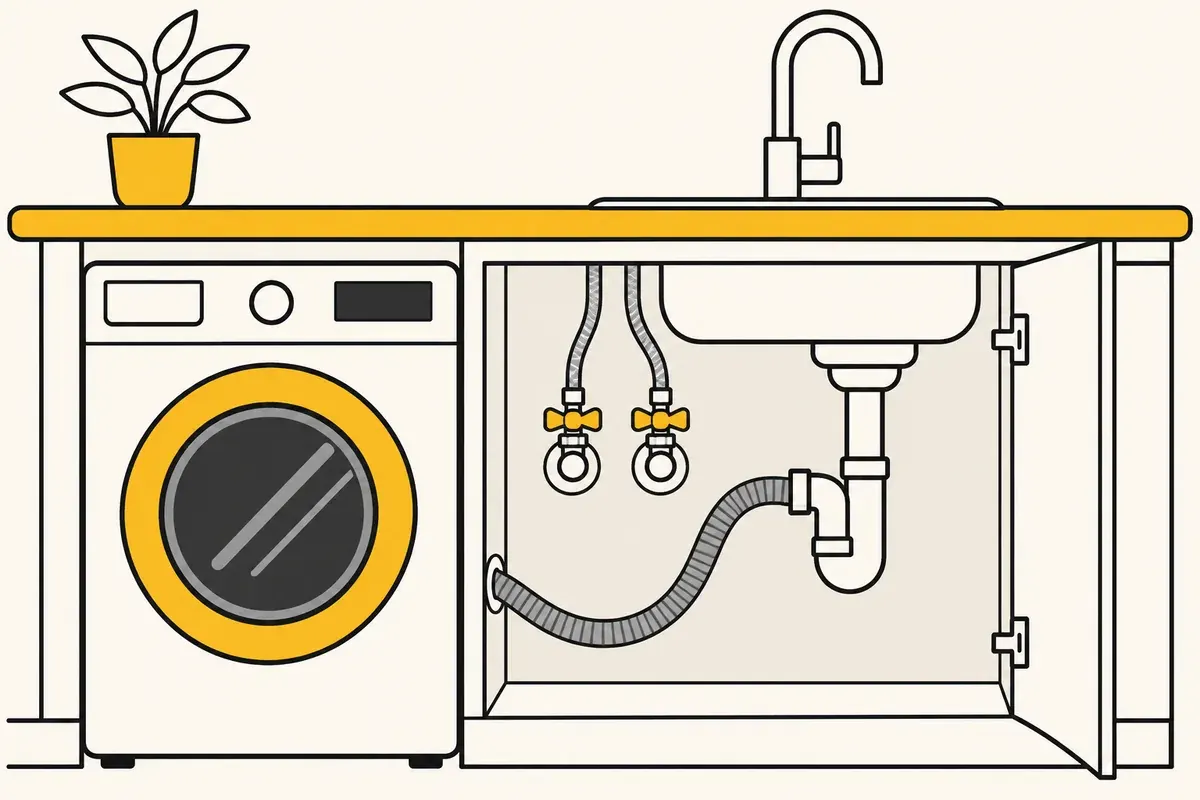
A washing machine hose that spins without tightening may be the wrong size or missing a washer. See inlet hose connections. An outside tap with a loose connector may need the right size nozzle.
Backflow
Hoses attached to taps need backflow protection suitable for their use, see irrigation protection.
Buying
Take the old part or a photo with calipers to a supplier. Note both ends, male or female, and seal type.
Help
Describe the connection on the contact form, then email a measured photo with your reference. Gas threads and fittings are for a Gas Safe registered engineer only.
Common confusions
Metric threads are described by actual diameter in millimetres, such as M10, so a mixer stud and a BSP union use quite different systems even when they look alike. Some imported appliances and accessories use other thread standards, which can start a turn or two before binding. Do not force them. A fitting described only by a fraction, with no standard named, is worth checking against the table before purchase. Compression sizes such as 15 mm refer to the pipe outside diameter, not a thread, so a 15 mm compression nut is not interchangeable with a half inch BSP union.
Keeping a note
Once identified, write the size on a tag near the connection or in your household file. Next time a hose, tap or adaptor is needed, you will not have to isolate the water just to measure it again. Photograph the washer too, since the face seal often differs between brands, and keep a spare of the correct one.
Damaged threads
Flattened or crossed threads on brass rarely seal reliably. Replace the part.
Questions people ask
Why does a half inch BSP thread measure about 21 mm?
Hozelock explains that the BSP figure refers to the internal diameter of the pipe, not the outside of the thread.
Which size are garden and appliance connections?
Many are three quarter inch, but check by measuring.