Plumbing for a fridge freezer with a water dispenser or ice maker: cold feed, isolation valve, backflow protection, pipe route, filter flushing and checks.
A plumbed fridge freezer needs a drinking-water cold feed, a valve you can reach to shut it off, suitable backflow protection and a protected tube to the back of the appliance. Send the model number through the contact form, then email a photo of the nearest cold pipe quoting your reference.
What the connection job covers
- taking a branch from a cold drinking-water pipe;
- fitting an accessible isolation valve;
- providing backflow protection where the appliance does not already satisfy UK requirements;
- routing and fixing the supply tube;
- joining the appliance connector and any external filter;
- flushing and leak checking.
Worktop cutting, cabinet alterations, sockets and appliance repair are separate. Agree the price and scope before work begins.
American-style and plumbed models
American style describes the cabinet shape, not the plumbing. Some models feed a dispenser and ice maker from a pipe, while others use an internal bottle or tank, so confirm that yours has an external water inlet. Samsung's water line instructions say to connect only to a drinkable water source, fit a shut-off valve, and never use its plastic tube without the moulded end where that design applies. They also ask for 7 to 11 litres to be flushed through the dispenser after connection. Your own manual takes priority.
Choose a cold drinking-water pipe that does not run beside a hot one: the water fittings requirements expect cold supplies to be kept at no more than 25°C so far as reasonably practicable.
Backflow protection
Do not assume the fridge takes care of it. Water Regs UK says only some appliances have built-in backflow protection acceptable in the UK, and that meeting the standard BS EN 61770 is not enough on its own. Where the built-in protection is inadequate, a separate suitable device is needed. The legal duty sits in the water fittings requirements, and your water company can advise on your case.
Isolation and route
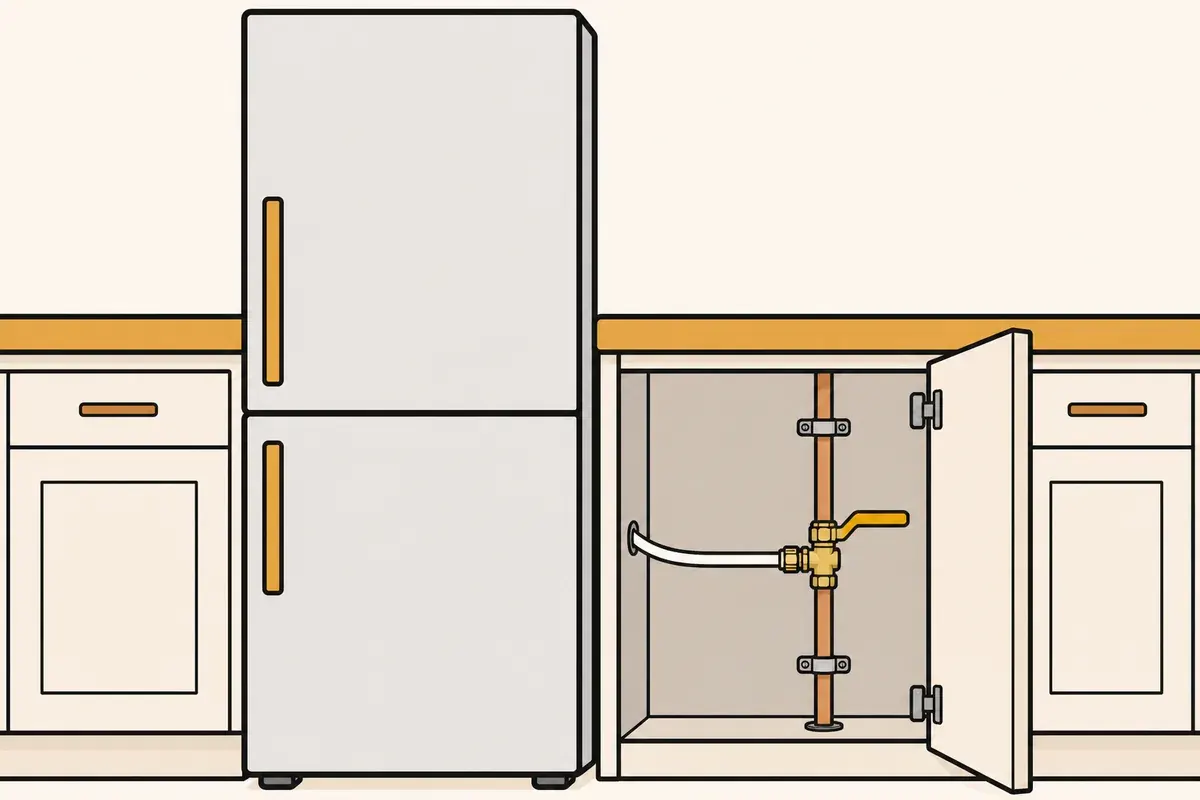
The shut-off valve should be somewhere you can use it without dragging the fridge out, such as a neighbouring sink cupboard. Plan the tube so that it:
- is not crushed by the appliance or a drawer runner;
- stays away from hot pipes and oven housings;
- has no hidden joint, because joints must not be concealed water fittings;
- leaves enough slack to pull the fridge forward for cleaning.
An island or opposite wall can make the route the hardest part. Say if the floor is solid, boarded or already finished.
Pressure and filters
Dispensers and ice makers need a minimum pressure, and the figure depends on the model and filter. Samsung UK, for instance, gives a minimum of 30 psi for its ice makers and suggests checking that the dispenser delivers at least 150 ml in 10 seconds. LG UK gives a range of 20 to 120 psi. Read your own manual, particularly in a top-floor flat or where other taps already run weakly.
If your appliance has an external filter, fit it in the direction of flow marked on its body and mount it where it can be changed. Beko's guide has the user run about 10 glasses through a new filter without drinking them, check for leaks, and replace the filter every six months. Other brands set their own intervals.
Parts supplied in the box
Open the accessory pack and check it against the manual before the visit. Note the tube diameter, any adapters and whether the connector expects tubing with a moulded end. Do not substitute a different supply fitting without checking the manufacturer's instructions.
Before you send it
- Model number and whether it has already been delivered.
- Photo of the proposed appliance position.
- Photo of the sink cupboard or other cold pipe.
- Approximate distance between them and what lies in between.
- Who is permitted to alter cabinets or floors, if you rent.
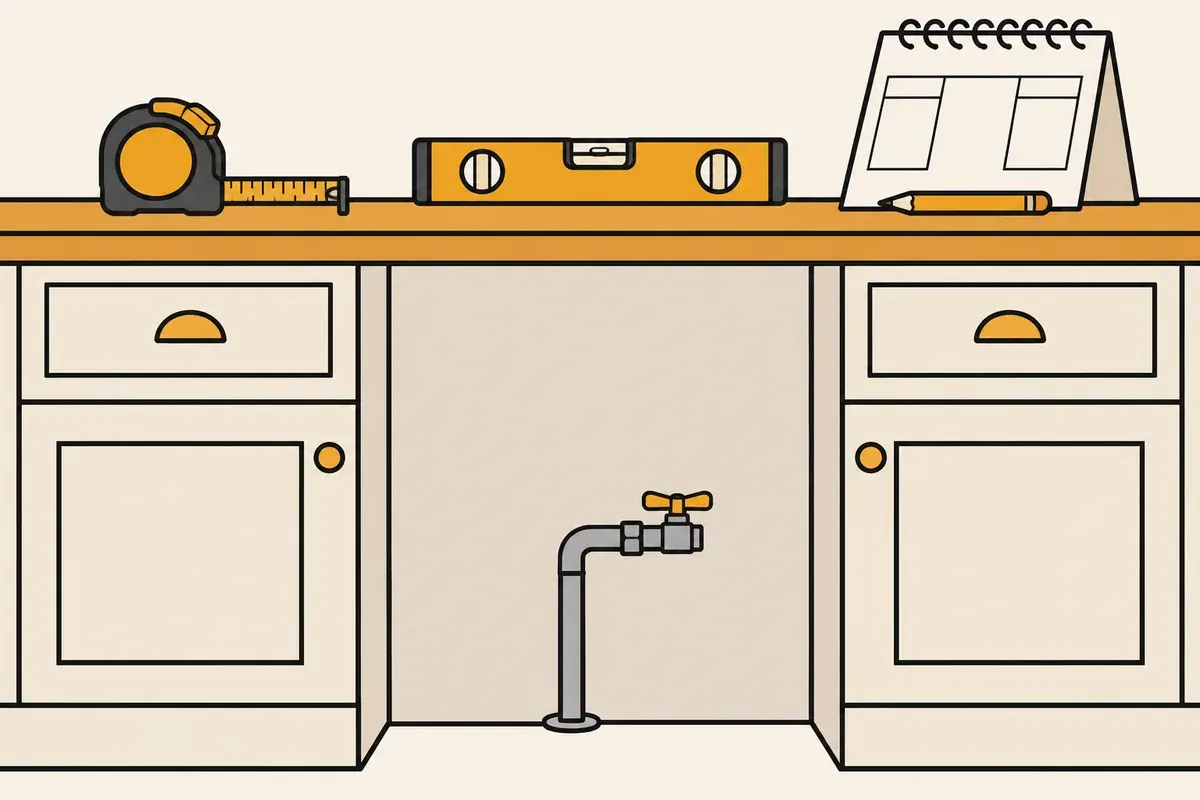
The measuring sheet covers door swing and depth, which are worth checking before the water line is planned.
If you want to do it
A manufacturer's push-fit kit joined to an existing, suitable appliance valve may be manageable. Cutting into supply pipework, choosing backflow protection or running a concealed route is a better task for a competent plumber. After any installation, inspect each joint with dry paper, then look again after a few hours and after the first day.
Questions people ask
Does every American-style fridge need plumbing in?
No. Some have a refillable tank. Check the model specification before arranging any pipework.
Does a fridge need a drain connection?
This job is about the water supply. Check your manual: if it asks for anything else, include that page with your enquiry.