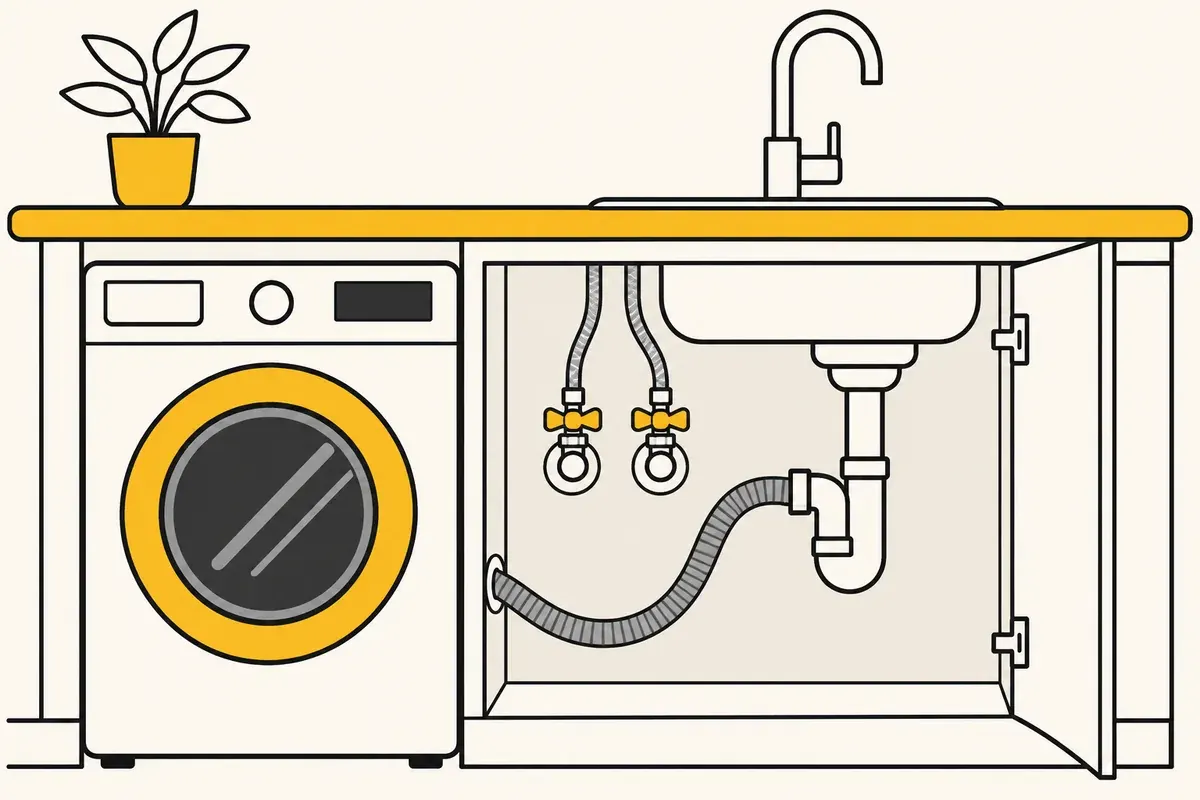
Moving a washing machine to another room needs a cold feed, a trapped foul waste with fall, a safe socket and a firm floor. See what to check and send us.
Moving a washing machine to another room is mainly a question of routes. The new spot needs a cold water supply, a waste that reaches the foul drain, a suitable electrical socket and a floor that can take the shaking. This job covers the water supply and waste connections.
What decides whether it works
Waste. Approved Document H gives a washing machine trap of 40 mm with a 75 mm seal. The branch needs a continuous fall, a connection to a stack or suitable drain, and access for clearing it. A long, flat run across a house is the usual reason a proposed position is poor.
Right drain. Thames Water says appliances plumbed into surface water drains are misconnections and can pollute rivers. Before connecting to an outside gully or downpipe, establish what it feeds.
Supply. The new feed needs pipework, an isolating valve beside the machine and adequate pressure. One Bosch washing machine manual gives an optimum supply of 1 to 10 bar for its machines and calls for a reducing valve above that; check your model.
Hose height. The same manual gives a drain outlet of 60 to 100 cm above the standing surface for standard and Aqua-Secure models, with a different range for its Aqua-Stop version.
Frost. Garages, porches and outbuildings can freeze. Water fittings must be protected against damage from freezing.
Choosing between rooms
| New location | Main question |
|---|---|
| Utility room next to kitchen | Can the existing waste be extended with fall |
| Bathroom | Electrical position and splash risk |
| Upstairs cupboard | Floor stiffness, noise, leak consequences, stack access |
| Garage or outbuilding | Frost, foul drain, route outside |
| Hallway cupboard | Depth for hoses, ventilation, access |
What to send
- a rough plan showing the present and proposed positions with distances;
- photographs of both spaces, the stopcock and any pipes nearby;
- where you think the soil pipe or drain is;
- floor type and which rooms are below;
- the machine model;
- landlord or freeholder consent, if it applies.
What to agree before work starts
Ask where pipes will run, what will be visible, who opens and restores floors or walls, how the old connections will be capped and how the new waste will be tested. The old valve should not be left as an unprotected open outlet, and an unused trap can dry out and release smells.
Electrical sockets and new circuits belong to an electrician. Core drilling, boxing in, flooring and decoration are separate unless agreed.
Doing parts yourself
Measuring, photographing and clearing access save time. Cutting into a stack, running a long new waste or working on a shared supply is better left to someone competent.
Use the contact form with your postcode and a short description, then email the photographs quoting your reference. No fixed price is published; ask what a quoted figure includes before agreeing. For a short extension close to the sink, the waste connection guide may be all you need.
Questions people ask
Can the waste go to the nearest outside drain?
Only if that drain carries foul water. A rainwater gully is the wrong place for it.