How to disconnect a dishwasher: isolate power and water, drain both hoses, release the cabinet fixings, move it without damage and cap the services.
Disconnecting a dishwasher is a sequence: finish any water in the machine, isolate electricity, shut the supply valve, drain and detach both hoses, remove the fixings and slide it out. Then secure everything left behind.
Prepare
- Run a drain programme if the machine works, so it is empty.
- Remove racks or tape them so they cannot roll.
- Clear the cupboard under the sink.
- Collect a shallow tray, towels, a bucket, spanner, screwdrivers and floor protection.
Isolate electricity first
Switch off and unplug. Many dishwashers plug into a socket in the next cabinet. Where the lead goes into a fused connection unit with no plug, switch off the circuit and use an electrician to disconnect. Never cut a live or unidentified cable.
Close the water
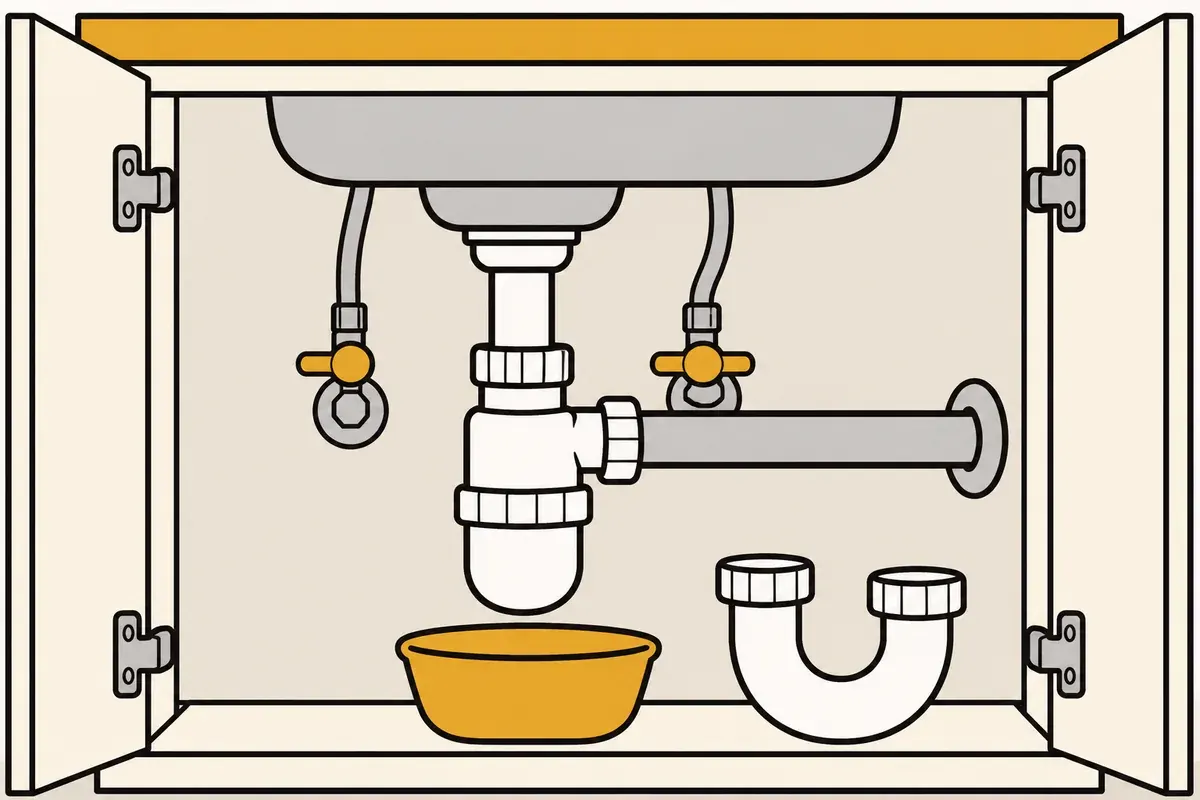
The fill hose normally ends on a small valve under the sink or behind a cabinet. Turn it until the handle sits across the pipe, or fully closed for a knob. Put the tray under it and unscrew the hose nut slowly. A little trapped water will come out.
If the valve leaks, spins or will not close, shut the main stop tap before going further. A faulty valve can be replaced, as described under washing machine valve replacement, which uses the same style of fitting.
Detach the drain
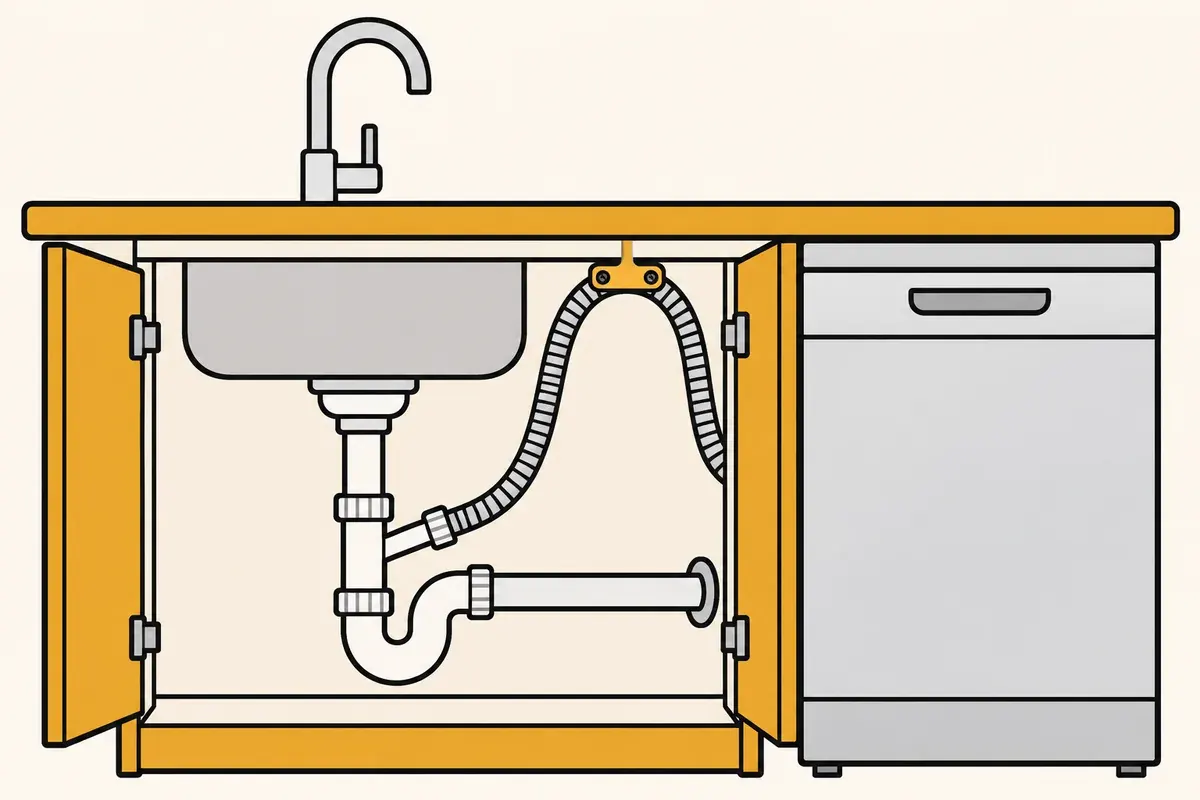
The corrugated hose joins a spigot on the sink trap, a standpipe or a disposal unit. Loosen the clip, hold the hose end upright over the bucket and ease it off. Lower it to drain. Hose water can be hot after a recent cycle, so let the machine cool first.
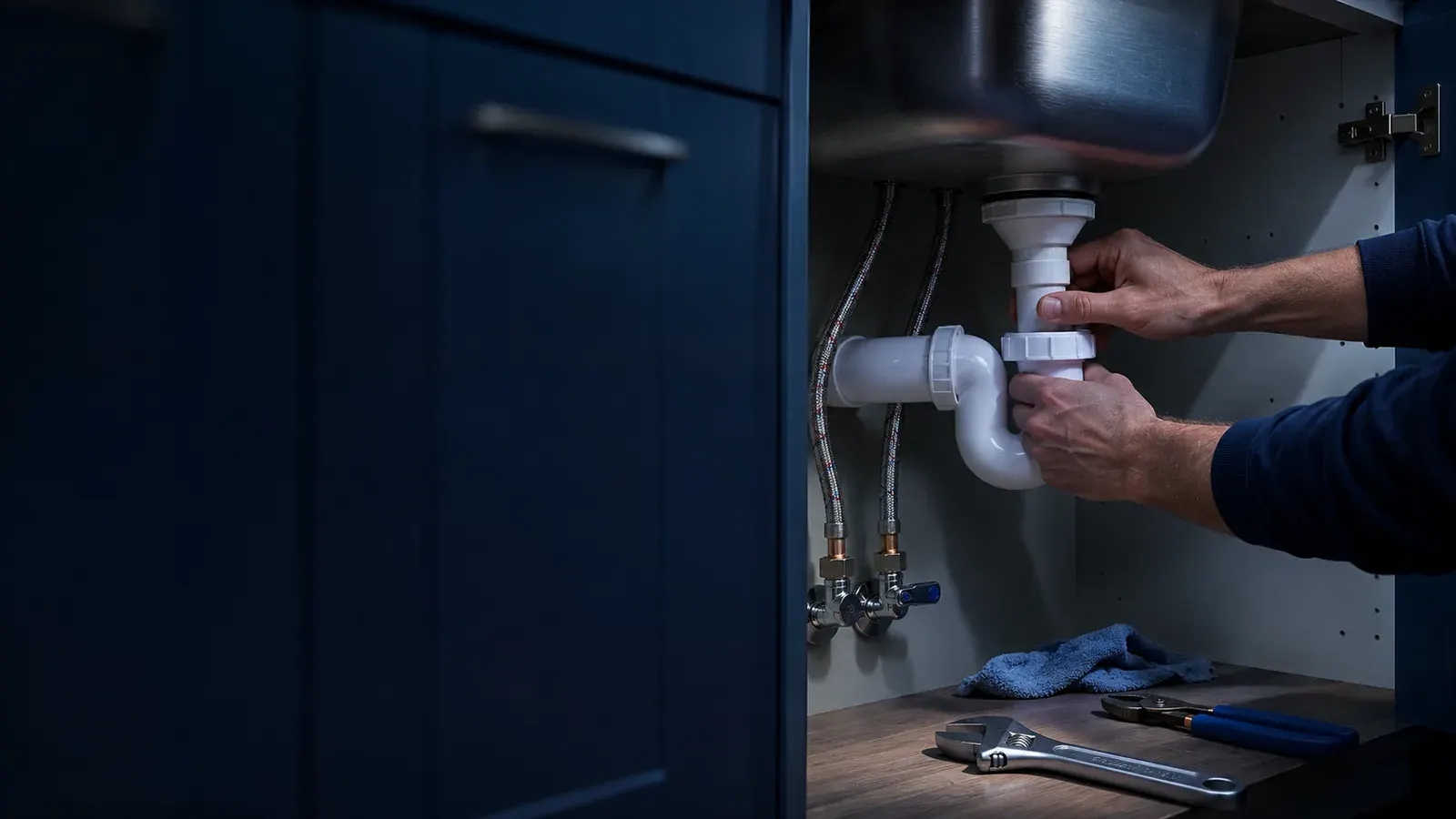
Cap the spigot straight away with the correct blanking cap. An open spigot will pour sink water into the cupboard. If your trap has no cap available, replace the trap or fit one that seals properly, as covered in sink trap replacement.
Release it from the kitchen
| Fixing | Where to look |
|---|---|
| Brackets to worktop | Top corners of the door opening |
| Side screws | Inside the door frame, sometimes under caps |
| Plinth | Clipped board in front of the feet |
| Furniture door | Screwed to the appliance door from inside |
An integrated machine often has a decorative door that makes the appliance door heavy. Support the panel while removing it, since balance springs can lift the appliance door sharply once the weight changes. Secure the door closed afterwards.
Lower the feet if the machine is jammed beneath the worktop. New flooring laid in front can trap it; do not drag it over the edge by the door.
Slide it out
Check the data sheet for weight and hose reach: one 45 cm Bosch integrated model weighs 27.3 kg, with a 165 cm inlet hose, 205 cm outlet hose and 175 cm power cord. Pull gently from the base while someone feeds the hoses and cable through the cabinet holes. Stop at any resistance. A kinked hose or snagged plug can be torn off. Keep the machine upright so residual water stays in the sump, and tape the hose ends up above it.
Leave the space safe
- Capped valve outlet, then water on and checked.
- Capped drain spigot, then run the sink and check.
- Socket accessible and dry.
- Supporting panels and worktop not left sagging.
Run both taps and fill the sink once. Look at each cap again later in the day.
Disposal and refitting
A working appliance may be reused. Otherwise ask the new supplier about collection or use a council facility that accepts large electrical items. To move or reinstall the machine, keep the door template, brackets and screws in a labelled bag, then follow fitting an integrated dishwasher.
If any step meets a seized valve, hidden joint or fixed wiring, stop, report it in the contact form and email photos afterwards.
Questions people ask
Can I leave the water valve closed and the hose attached?
For a short pause, yes, but if the machine is gone remove the hose and cap the valve outlet so a knocked handle cannot release water.
What if my dishwasher is wired into a switch plate?
A hard-wired appliance should be disconnected by a competent electrician. Switching it off does not make the cable safe to remove.