Tools for basic plumbing jobs on taps, traps and toilets: spanners, grips, cutters, tape and consumables, what each does and when to stop and get help.
A small kit covers most tap, trap and toilet jobs: two adjustable spanners, grips, a basin wrench or box spanners, screwdrivers, hex keys, a pipe cutter, cloths, a bucket and the correct washers. Knowing how to shut off water matters more than any tool.
Before tools
Find the inside stop valve and check that it turns. Photograph pipes before dismantling. Read the product sheet.
Thames Water says the valve turns clockwise to close and should not need excessive force. If it is stuck or missing, deal with that before starting.
Core kit
| Tool | Used for |
|---|---|
| Two adjustable spanners | One holds, one turns |
| Slip joint pliers | Shrouds and plastic nuts, with cloth |
| Basin wrench or box spanners | Tap backnuts in tight spaces |
| Flat and cross screwdrivers | Handles, valve slots, panels |
| Hex key set | Lever grub screws |
| Pipe cutter | Square cuts in copper |
| Deburring tool or file | Smooth pipe ends |
| Tape measure and torch | Sizes and inspection |
Consumables
- thread seal tape for threads that need it;
- fibre and rubber washers in the correct sizes;
- compression olives;
- silicone sealant for sanitary use;
- penetrating fluid;
- dry paper for finding drips.
Washer-sealed joints need no tape.
By job
Taps: spanners, hex keys, basin wrench, replacement cartridge or washers. See removing a kitchen tap.
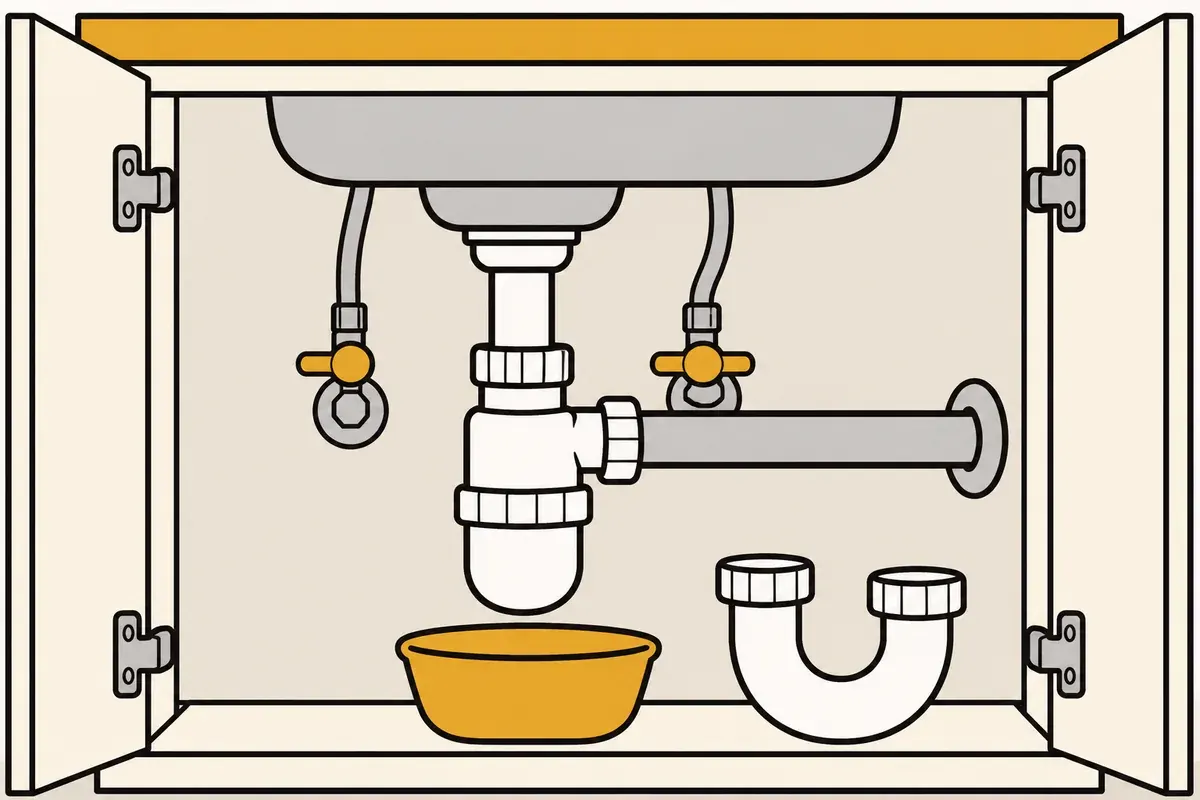
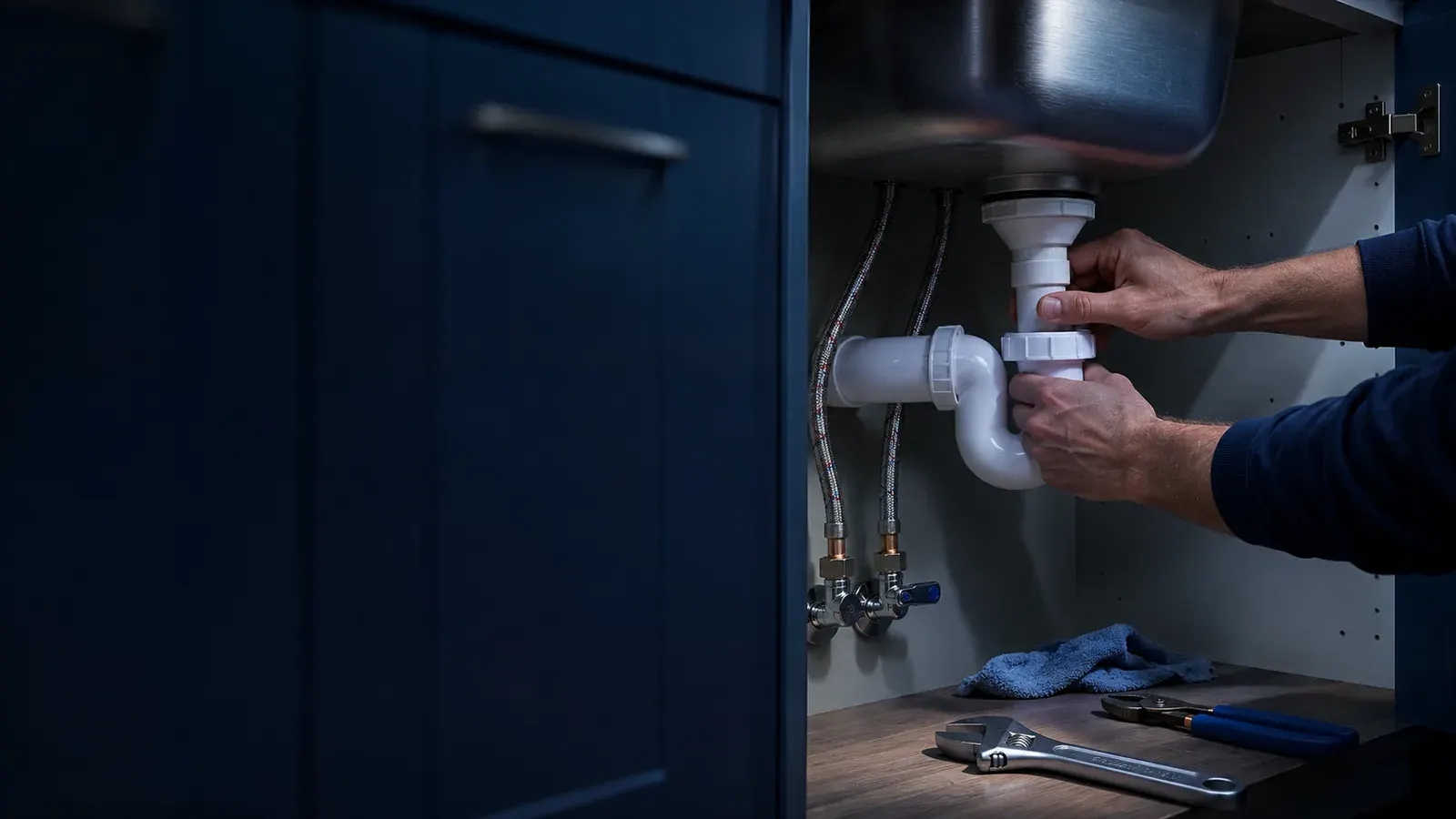
Traps: bucket, cloth and hand-tight nuts; heavy pliers can damage plastic. Replace like for like: Approved Document H gives a 32 mm trap for a basin and 40 mm for a bath, shower or sink, with minimum water seals that vary by appliance. See trap replacement.
Toilets: screwdriver, small spanner, sponge to empty the cistern, new seals. Handle ceramic gently.
Copper joints: pipe cutter and spanners for compression joints.
Mixer tails: screw them into the tap by hand where the maker says so, as this Bristan fitting sheet does.
Push-fit: some systems need their own release tool, such as the HepKey named in the Hep2O adaptor sheet.
Safety
Wear eye protection when cutting or using chemicals, and gloves near drains. Do not drill walls without checking for pipes and cables. Keep electrics dry and isolated; ask an electrician about anything wired. Never work on gas pipes or appliances: that needs a Gas Safe registered engineer.
Quality tips
A spanner that fits closely avoids rounding nuts. Use cloth on chrome. Avoid over tightening; most leaks after DIY come from damaged seals or crossed threads, so start every thread by hand.
When to stop
- the stopcock will not close;
- a fitting is seized and the pipe twists;
- lead or unknown pipe;
- hidden leak or damp;
- shared supply in a flat.
Keeping a kit
Store tools dry, with a bag of spares for your own taps and toilet, labelled by model. Keep appliance manuals nearby.
Borrowing or buying
For one job, borrow a specialist tool such as a basin wrench. Buy quality basics you will reuse.
If you would rather not
Describe the job and send photos through the contact form, emailing images with your reference. A list of small jobs can be grouped in one visit.
Using the tools well
Before turning anything, work out which way it unscrews as seen from your position, which is easy to get wrong when looking upwards. Put the second spanner on the part that must stay still. Apply steady pressure and avoid sudden jerks that crack ceramic or shift concealed pipes. Lay removed parts on a cloth in order, and photograph each stage so that washers go back correctly. Plug the basin before unscrewing small screws.
What not to buy
Single-use gadget kits with mixed washers rarely contain the exact part. Cheap spanners that spread under load round off nuts. Chemical leak sealers are not a repair for a drinking water joint. Spend on the few items you will use and buy washers and cartridges to match your own fittings.
First test after any job
Restore water slowly, check with dry paper, run the fitting, then look again an hour later and next morning.
Questions people ask
Do I need soldering equipment?
Not for most tap, trap and toilet jobs, which use mechanical joints.
What is the most important thing to have?
Knowing where the stop valve is and that it works.