Compare close coupled, low level, high level and concealed toilet cistern types, work out which flush mechanism is inside, and know what to measure for parts.
Cisterns are told apart by two things: where they sit (on the pan, on the wall above it, or hidden behind a panel) and what releases the water (a lever siphon or a push button flush valve). Identify both before you order any part.
By position
| Type | How to recognise it | Access for repairs |
|---|---|---|
| Close coupled | Cistern sits directly on the back of the pan | Lift the lid |
| Low level | Separate cistern on the wall, short flush pipe | Lift the lid |
| High level | Cistern well above head or shoulder height, long pipe, pull chain | Steps needed |
| Concealed in furniture or a duct | Only a button or plate visible | Through the panel or worktop |
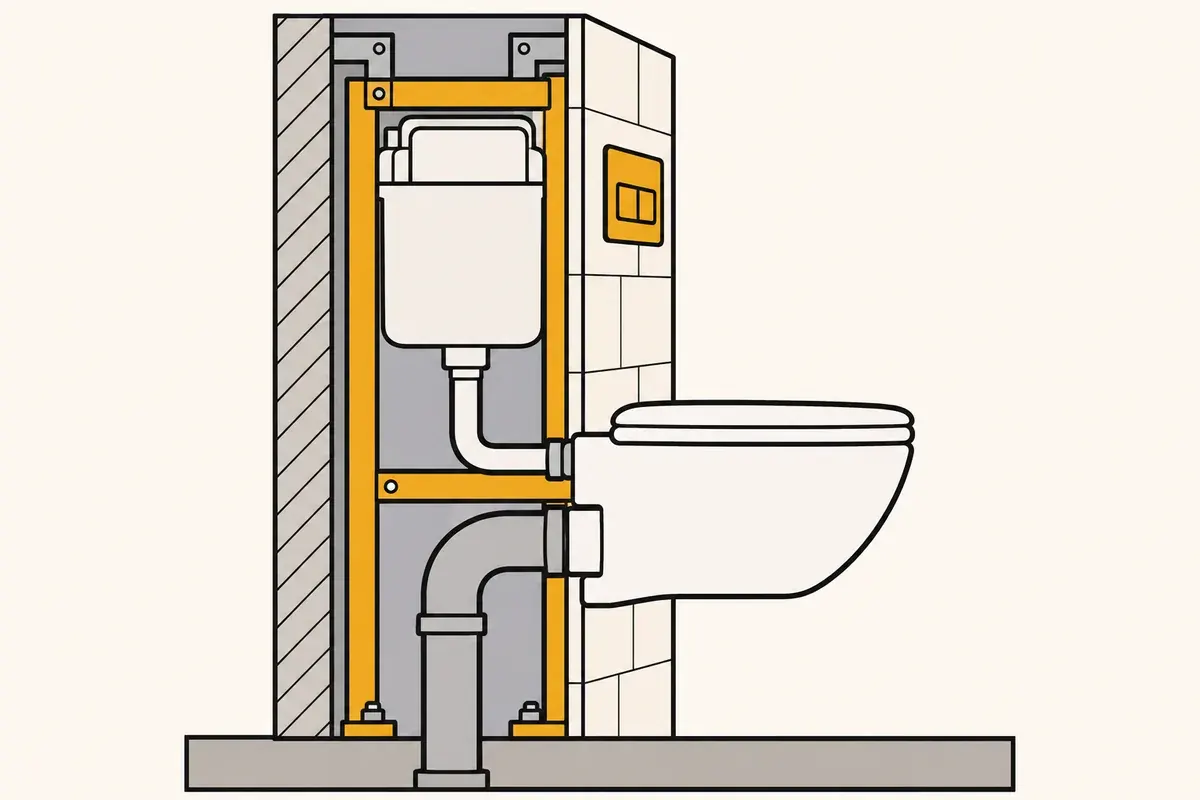
| In-wall frame | Slim cistern in a steel frame, usually with a wall-hung pan | Through the flush plate opening |
| One piece | Cistern and pan moulded as a single unit | Lid, sometimes tight inside |
A close coupled toilet has a bolted joint and a large seal between cistern and pan. A low or high level suite has joints at each end of the flush pipe. Those joints are the usual places to check when water appears on the floor during a flush.
By flush mechanism
Lever siphon. A handle lifts a plate inside a tall inverted U, which starts water flowing over into the pan. There is no valve seat at the bottom for water to creep past.
Drop valve with lever. A lever lifts a seal off an outlet in the base.
Push button flush valve. One or two buttons lift the valve by cable or rod. Dual versions give a small and a full flush.
Take the lid off and look. A push button lid may be held by the button itself, which often unscrews, so check before pulling. A wide inverted U shaped body points to a siphon. A slim central tower joined to the button points to a flush valve.
The filling side
Separate from the flush is the inlet valve, which refills the cistern. It may use a float on a long arm or a compact float that slides on the valve body. The water supply enters at the side or the bottom. Note which before buying, because a side entry valve will not fit a bottom entry hole.
Under the water fittings regulations, the inlet to a toilet flushing cistern is to have a servicing valve next to the cistern. Look for a small valve on the supply pipe. Older installations may lack one, so find the stopcock before starting work.
Flush volume
The same regulations limit current installations to a single flush of no more than 6 litres, and a dual flush where the small flush is no more than two thirds of the full one. Cisterns should also be marked inside with the intended flush volume, which is worth reading when the lid is off. Older cisterns were built to different volumes. When replacing parts in an old cistern, choose parts intended for it and do not assume a modern low volume setting will clear an older pan.
What to note before ordering
- Make and model, often stamped inside the cistern or under the lid.
- Handle or button, and the size of the hole it passes through.
- Supply entry: left, right or bottom.
- Overflow arrangement: internal into the pan, or a pipe leaving through the wall.
- Internal height and width, for new valves.
- A photo of the inside with the lid off.
Lids are fragile and hard to replace for discontinued suites. Put yours on a towel on the floor, away from where you are working.
Which guide next
For a weak or dead lever flush, see siphon replacement. For a button that runs on, see dual flush valve replacement. A hidden cistern with no clear access panel is worth having looked at before anyone cuts the boxing: describe it in the contact form and email a photo of the plate and surrounding wall.