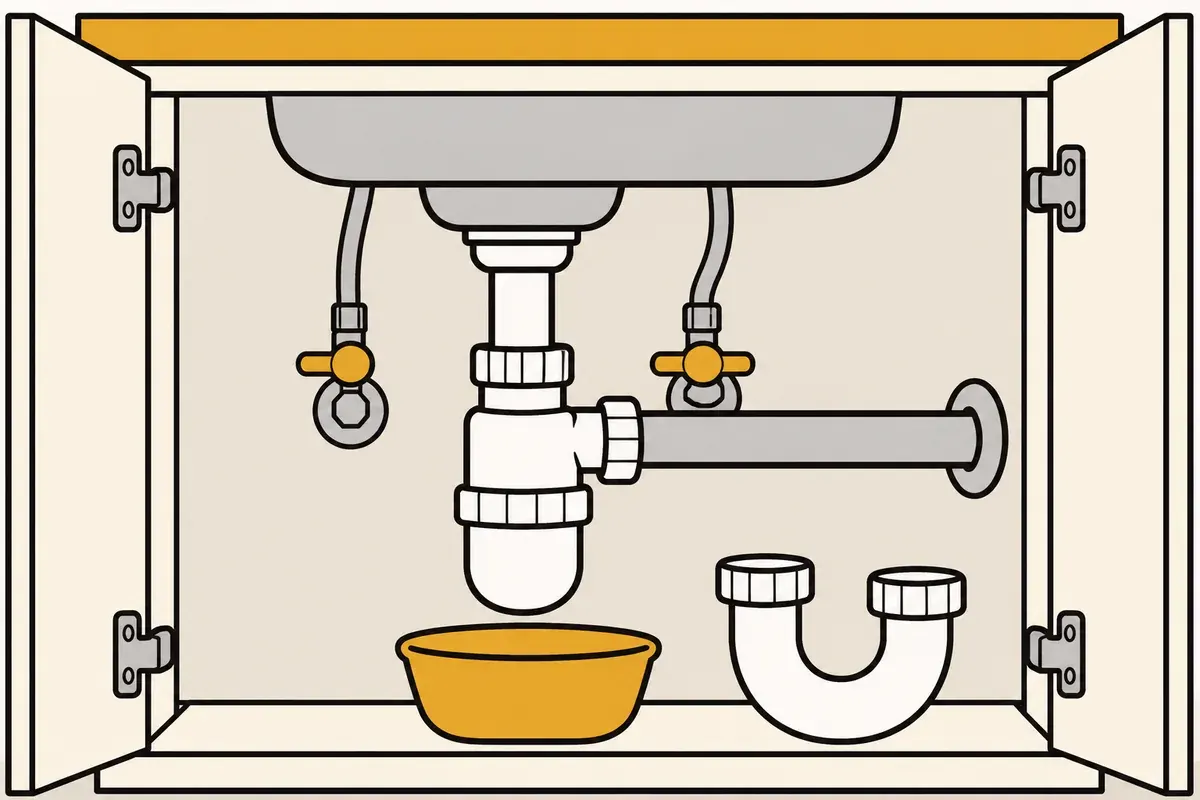
Compare sink trap types for a kitchen: tubular, bottle, space saver, appliance and shallow designs, how seal depth matters, and which frees up cupboard space.
For storage, a space saver kit that pushes the trap to the back of the cupboard usually frees the most room. For easy clearing, a tubular or bottle trap with accessible joints is simpler. Whichever shape you pick, check the pipe size and water seal depth first.
The figure that is not about shape
Approved Document H gives a minimum of 40 mm trap diameter and 75 mm water seal for a sink. Some slim or space saving traps have shallower seals, so read the label before buying.
The main designs
| Design | Shape | Strength | Weakness |
|---|---|---|---|
| Tubular P trap | U bend with outlet to a wall | Smooth path, easy to rinse | Takes central space |
| Tubular S trap | U bend with outlet downward | Suits floor exits | Layout can lose its seal if poorly arranged |
| Bottle trap | Cylindrical body | Compact, bowl unscrews | Narrower internal path can collect debris |
| Space saver kit | Flat pipework tight to the back | Frees drawer and bin room | More joints; needs the right outlet height |
| Multi bowl kit | Joins two or three outlets | One trap for several bowls | Longer runs to keep falling |
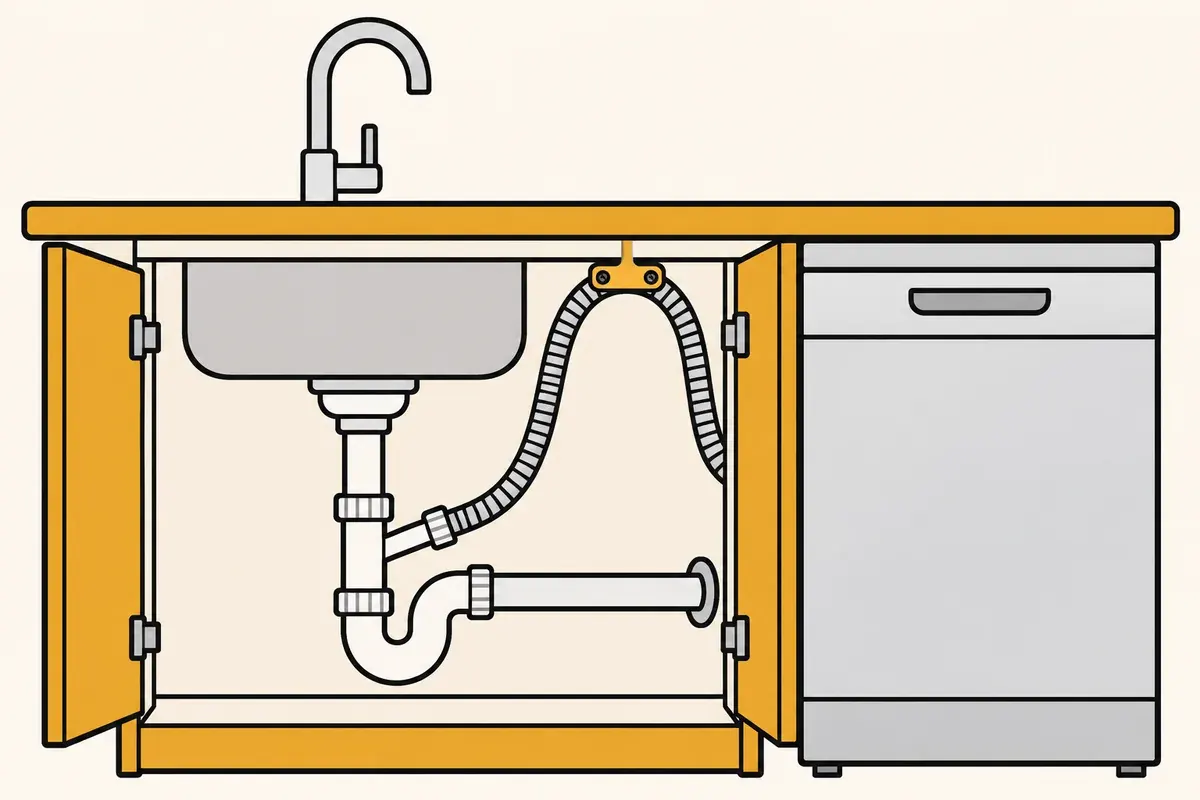
| Appliance trap | Adds one or two hose nozzles | Tidy appliance connection | Spare nozzle must stay capped |
Space saving in practice
McAlpine's sink kits include single, double and three bowl space saver kits, designed to leave the storage space under the bowls usable. Similar kits exist from other makers.
Before choosing one:
- measure from the underside of the bowl to the centre of the wall pipe;
- check how far forward the waste outlet sits, since the first elbow must start there;
- allow for a drawer runner, pull-out bin or water softener;
- make sure the lowest part can still be unscrewed with a bowl beneath it;
- confirm the finished run falls towards the drain.
If the wall pipe is higher than the trap outlet, a new trap shape will not fix it. The pipe has to be altered.
Appliance connections
Choose the number of nozzles you need now, plus none you will leave open. A blank cap or the supplied plug closes a spare. The dishwasher trap guide covers hose sizes, knockout discs and hose routing.
Materials and joints
Plastic traps are common under kitchen sinks because they are hidden and easy to adjust. Chrome plated brass traps are chosen where visible. Compression style joints with washers can be undone; check each washer faces the way the instructions show. Solvent welded joints are permanent, so keep them away from places you need to clear.
Anti-syphon and resealing traps
These admit air to protect the water seal where pipe runs are long or steep. They treat a symptom of pressure changes in the pipe. If gurgling and smells began after alterations, the layout deserves a look before buying a special trap.
Before taking the old one off
Photograph the existing assembly from the front and side, then note which outlet feeds which part. Put a bowl under the lowest joint, since the trap holds water even when nothing has been run recently. Keep the old pieces until the new trap has been tested, because a waste thread or wall pipe adaptor from the old set may explain why the new one does not line up.
After fitting, fill the bowl, release it in one go and check each joint with dry paper. Run the appliance through a drain cycle too if a hose is attached.
Choosing in five questions
- How many bowls and overflows?
- How many appliance hoses?
- What height and direction is the waste pipe?
- What must fit in the cupboard?
- Can you reach it to clean it?
Take a photo of the existing trap with a tape measure beside it to a supplier, or, if you want it fitted, start with the contact form and email that photo. The practical steps are in sink trap replacement.