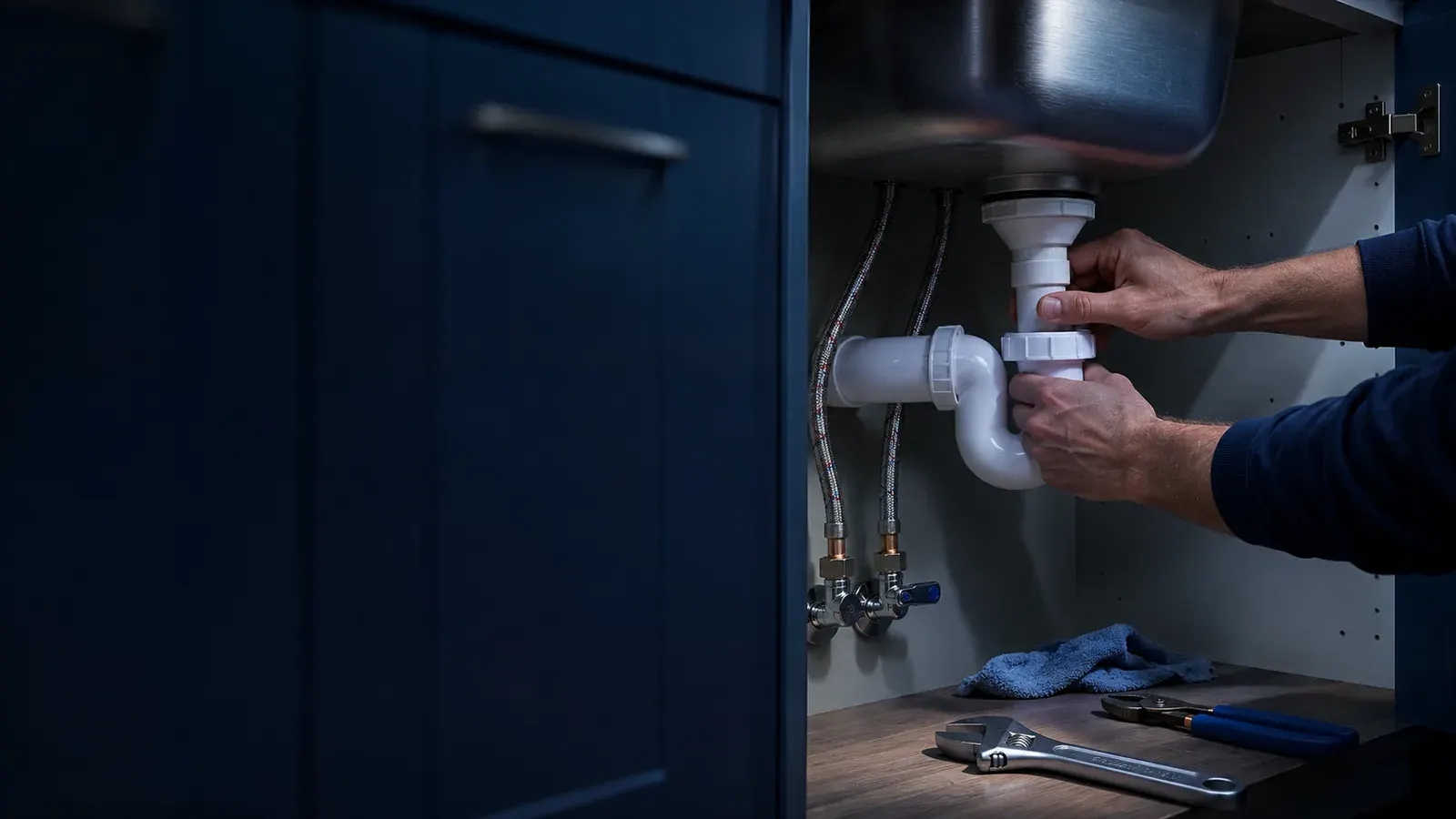
How to remove a basin tap: isolate and drain, free the pipe connectors, loosen the backnut with a box spanner, deal with corrosion and protect the basin.
To remove a basin tap, shut off and drain the supplies, disconnect the pipes beneath, hold the tap steady and undo the backnut with a box spanner or basin wrench, then lift the tap out. The risk is cracking the basin by forcing a seized nut.
Tools and preparation
- Box spanner set or adjustable basin wrench;
- open spanners to fit the pipe nuts;
- torch, towel and shallow tray;
- penetrating fluid;
- cloth to protect the tap and basin.
Clear the cupboard. A pedestal may need moving for access, which is a job to approach carefully because the basin may rely on it.
Isolate
Close the valve under each tap. If none exists, turn off the inside stop valve for cold, and close the hot supply at the cylinder or other source as your system requires. Open the taps and wait until the water stops. B&Q's tap removal guide describes isolating valves worked by a lever or a screwdriver slot with a quarter turn. Test that flow has stopped before loosening anything.
Disconnect
- Place the tray under the joint.
- Hold the tap or pipe to stop twisting.
- Loosen the connector nut with the correct spanner.
- Move the pipe aside gently; do not kink flexible hoses or bend copper hard.
- Cap or hold open pipes safely.
Flexible tails may unscrew from a mixer body only once it is free, so disconnect them at the valve end first.
The backnut
Slide the box spanner over the tail and engage the nut fully. Use a short bar through the spanner. Turn while a helper holds the tap from above with a wrapped grip. Looking up, the direction can feel reversed, so picture the nut from below before pulling.
Some taps use a horseshoe plate and a small nut on a stud; use a socket and keep the stud from spinning.
Seized fittings
Apply penetrating fluid and leave it, even overnight. Keep fluid off plastic parts and rubber that it could damage. Try gentle movement both ways. Cutting a nut is possible with care but can easily damage ceramic. Do not use heat on a basin or near flexible hoses. A basin that cracks under load must be replaced, so decide in advance whether it is worth saving.
Remove and clean
Lift the tap out with its washers. Scrape away old putty with a plastic tool. Inspect the hole for chips and measure it for the replacement; see measuring tap holes.
Check the valves before you leave
Once the tap is out, open each isolating valve only after the pipe is capped or reconnected. An old valve that weeps or will not close fully should be changed while the cupboard is clear. The water fittings rules expect enough servicing valves to limit water loss during maintenance.
If a new tap is not ready
Cap each supply with a fitting made for it, restore water and check for drips. Do not leave open pipes with only a closed valve if children or building work could disturb the handle. A concealed joint is not allowed, so keep caps where they can be seen.
Hot water and drinking water
Water left in a hot pipe can still scald after the supply is closed, so open the tap, let it drain and cool, and keep your face clear of joints. If the new tap will go on later, label which pipe is hot and which is cold before capping them.
When to stop
Stop if the pipe turns with the nut, the valve leaks, the pipe is corroded or lead, or the basin begins to move. A kitchen version of the process is described under kitchen tap removal.
For help, describe the tap and what has stuck on the contact form and email a view from underneath quoting the reference.
Questions people ask
What is a back nut?
The large nut under the basin that clamps the tap to it.
The nut will not move. What now?
Give penetrating fluid time and support the tap. Stop before the basin takes the strain.